
Home > News
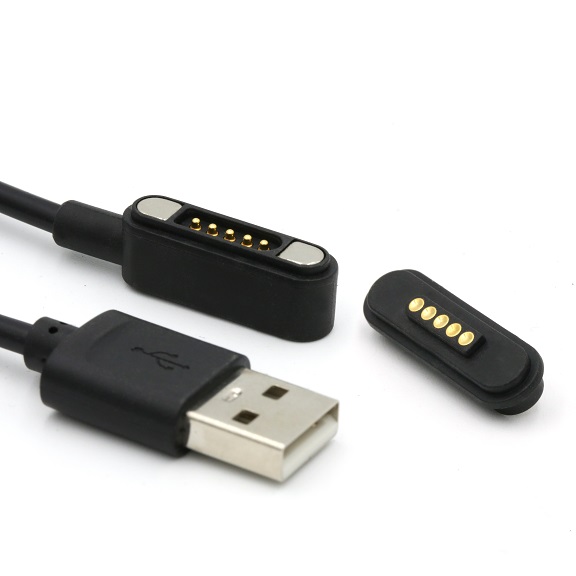
The magnetic charging cable, with its advantages of no need for unplugging and protection against damage to the phone's tail connector, has become the preferred choice for many people for daily charging. However, most users encounter common problems: after using it for a period of time, the magnetic adsorption becomes loose and does not fit tightly. Even with slight shaking or moving the phone, it is prone to fall off and disconnect. In some cases, it may even lose power unexpectedly during charging. This problem is not merely a product quality defect; it is the result of multiple factors such as the magnetic characteristics cable, daily wear and tear, environmental interference, and compatibility of accessories. Long-term use can also lead to frequent power interruptions, repeated start-ups and shutdowns, and damage to the phone's battery.
The fixed force of magnetic charging is entirely dependent on the magnetic attraction between the built-in magnets in the connector and the magnetic head of the mobile phone. Most magnetic charging cables use low-cost permanent magnets, which have limited magnetic strength and exhibit natural attenuation characteristics. As the usage time increases, repeated adsorption, bumps, and pulling will gradually weaken the magnet's magnetic property, resulting in a significant decrease in the adsorption force. At the same time, the high temperature generated during daily charging, the high temperature in summer, and the heat generated while charging and playing will accelerate the demagnetization of the magnets, causing the originally tight adsorption effect to become loose. In addition, most inferior magnetic charging cables are compressed for cost reduction, using low-purity magnets and insufficient magnetic flux. Even in their brand-new state, the suction force is already weak, and a slight vibration will cause them to loosen and fall off.
The metal contacts of the magnetic connector not only conduct electricity but also assist in positioning and ensure precise magnetic connection. In daily life, sweat, oil, dust and clothing fibers constantly adhere to the magnetic contacts and the adsorption surface, accumulating to form a layer of dirt. These impurities raise the contact surface, preventing the magnets from fully adhering and creating tiny gaps, significantly reducing the magnetic attraction. At the same time, the long-term oxidation and rusting of the metal contacts will cause the contact surface to become uneven, further damaging the adhesion. Many times, charging suddenly stops without any external force pulling it apart, but rather due to the obstruction of dirt causing the adsorption to be inaccurate, and a slight vibration will completely detach.
The metal contacts of the magnetic connection points not only conduct electricity but also assist in positioning and ensure precise magnetic connection. In daily life, sweat, oil, dust, and clothing fibers constantly adhere to the magnetic contact points and the adsorption surface, accumulating to form a layer of dirt. These impurities will raise the magnetic physical deformation and structural wear, which are the main failure causes after long-term use. The working principle of magnetic charging is precise point-to-point adsorption, requiring extremely high requirements for structural flatness. During daily use, accidental bumps, falls, bending and pulling can cause the magnetic head shell to slightly deform, the internal magnets to shift, resulting in an offset in the adsorption alignment and inability to fully adhere. At the same time, frequent adsorption and separation will cause slight wear on the edges of the magnetic head and the magnetic interface of the phone, gradually increasing the gap. Long-term uneven force will also lead to the aging and detachment of the internal fixing glue in the magnetic head, the magnet to become loose and shift, and the force during adsorption to be unbalanced. As long as there is a slight shake, it will directly disconnect. Some users charge randomly by dragging the wire, and the continuous pulling force will gradually pull the magnetic interface, exacerbating the loosening problem.
The specifications of magnetic charging heads on the market are diverse, and some magnetic heads do not match the thickness and size of the phone models. When installed in the phone's tail plug, they may cause slight protrusions or deviations, resulting in inaccurate magnetic alignment and insufficient adhesion. Additionally, the magnetic arrangement of some magnetic charging cables is unreasonable, with a small fixed area of magnetic force, relying only on local magnetic force for fixation, and the overall stability of the adhesion is extremely poor. Moreover, for phones with protective cases, the thick protective cases will occupy the space for magnetic connection, hindering the complete adhesion of the connector, causing the connector to be suspended and with insufficient suction force, and being highly prone to detachment.
During daily charging, if the phone is placed unevenly, the cable is bent and pulled, or there is a slight pulling force caused by turning or moving the device, these factors will continuously act on the magnetic suction interface. The magnetic suction structure itself has a low tolerance rate, and long-term stress will continuously aggravate the loosening problem. At the same time, a humid environment will accelerate the corrosion of the magnetic metal components and the aging of the structure, further reducing the stability of the suction.
To solve this problem, you can regularly wipe the magnetic contact points and the contact surfaces with alcohol to remove dust and dirt. Avoid forcefully pulling or dropping the magnetic connector. Pair it with the compatible magnetic accessories, remove the thick phone case before charging. Proper use and maintenance can effectively enhance the stability of the magnetic charging contact and prevent frequent charging interruptions.
Contact: Jerry_Shi
Phone: +86-13652508770
Tel: +86-13652508770
Email: [email protected]
Add: LianFeng Road,XianXi Village,ChangAn Town,DongGuan City,GuangDong Province,China