
Home > News
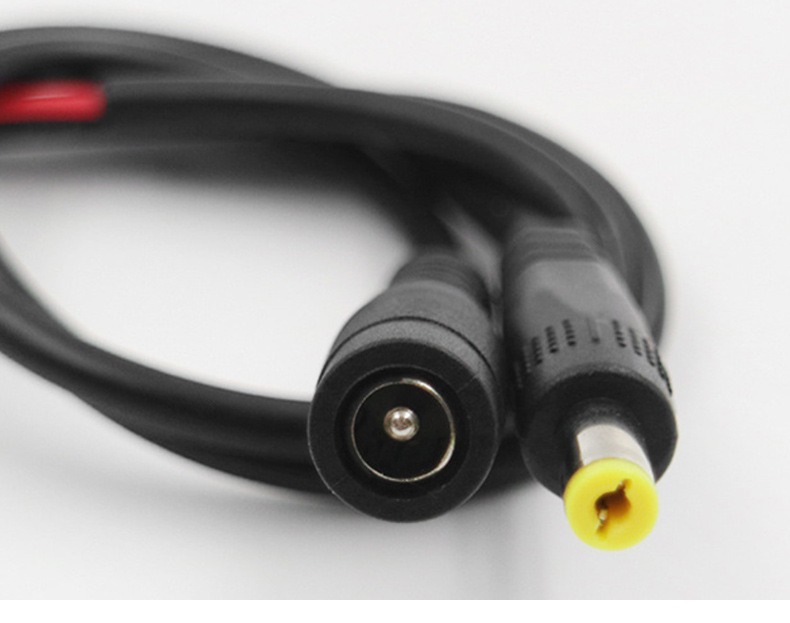
The DC power video integrated cable is mainly used in security monitoring, vehicle-mounted equipment, and industrial vision equipment. It simultaneously transmits DC cable and 75Ω analog video signals. The requirements for the purity of the conductor, shielding structure, DC connector process, and quality control system are much higher than those of ordinary DC power cables. Selecting a high-quality manufacturer cannot be based solely on the price; it is necessary to comprehensively evaluate from five dimensions: qualification certification, raw material control, production inspection, customization capability, and delivery and after-sales services. The following text fully dissects the selection criteria and key points to avoid pitfalls.
1. Verify the hard qualifications and eliminate un-compliant small workshops
Qualifications are the basic threshold for the quality of factory products. Regular large factories must have two types of certificates: system certification and wire material-specific certification. The name of the certificate holder must be exactly the same as the factory's business license. Those with affiliated certificates will be directly eliminated.
First, basic management system certification. Priority is given to holding ISO9001 quality management system, ISO14001 environmental system, and ISO45001 occupational health system certificates; for vehicle and industrial equipment components, additional IATF16949 automotive wire cable standards are required; high-end manufacturers should have their own CNAS-recognized laboratories and TUV Rheinland authorized testing centers, which can independently complete electrical, shielding, and aging tests without sending to third-party testing. High-tech enterprises and specialized, innovative small and medium-sized enterprises represent the stability of research and production, and can be regarded as bonus points.
Second, wire material and connector safety certification. Domestic sales require CCC and CQC certifications; for exports to Europe and the United States, UL, VDE, CE, and RoHS are required; DC male and female connectors, BNC video connectors require separate certifications. Non-standard products with only wire material certificates and no connector certificates will be rejected. Outdoor cables need to provide flame retardant VW-1, low smoke halogen-free, and weather resistance UV test reports, and underground buried cables need to issue anti-corrosion certification documents.
Third, industry-specific qualifications. Security equipment manufacturers need to have broadcasting and television equipment entry network certification, which can be compatible with AHD/TVI/CVI high-definition analog video; industrial vision manufacturers need to provide signal attenuation, impedance matching test reports to ensure no snowflakes or horizontal interference on long lines. Factories without complete certifications often use recycled copper and recycled plastics, which are prone to problems such as excessive voltage drop, video interference, and oxidation and short circuit of connectors.
and isolated; small factories only use single-layer aluminum foil, and when strong and weak electrical lines are laid in the same bundle, it will cause severe electromagnetic interference; after the camera's infrared is turned on at night, the screen flickers. Outdoor products use TPE and PE materials resistant to low temperatures and UV protection, while indoor products use environmentally friendly PVC, rejecting recycled secondary plastics (which are prone to cracking and releasing harmful substances).
DC and BNC connector process: High-quality manufacturers use thick copper shells and nickel base gold plating for connectors, with the gold plating layer thickness ≥ 0.8μm, and the connectors do not oxidize after 5000 insertions and extractions; integrated injection molding with stress buffering, tensile test ≥ 80N, to prevent glue bonding of connectors; inferior manufacturers have thin gold plating and simple assembly, and in humid environments, contact failure, power loss, and image interruption occur within 3 months.
III. Production Equipment and Full Process Quality Control, Verifying Production Stability
Small workshops mostly rely on manual peeling and manual welding, resulting in poor consistency; high-quality manufacturers are equipped with complete automated production lines and establish a 12 or more steps of factory-wide inspection procedures. Each batch can issue a complete test report.
In terms of production equipment: high-speed extrusion machines, automatic wire winding machines, fully automatic injection DC/BNC connector machines, and fully automatic soldering shielding machines are standard equipment; large factories are equipped with wire impedance testers, high-voltage insulation testers, high and low temperature aging chambers, bending life testers, and salt spray testers, which can simulate outdoor rain exposure, low temperatures, and long-term bending conditions, and screen out defective products in advance.
The quality control process needs to cover the three stages of incoming materials, production process, and finished products: each batch of copper materials, plastics, and connectors is sampled for testing; real-time monitoring of wire diameter, shielding coverage rate, and welding points; each finished wire is tested for conduction, insulation resistance, 75Ω impedance, shielding attenuation, and DC connector voltage drop; manufacturers can provide an inspection ledger for each batch of factory production, supporting third-party re-inspection by customers. Manufacturers without dedicated testing equipment generally have a higher defect rate in large-scale supply, and the later after-sales costs are extremely high.
IV. Customization, Sample Making and Delivery Capabilities, Meeting Batch Purchase Requirements
High-quality manufacturers can meet multi-specification customization needs and adapt to different scenarios and differentiated demands: supporting full specifications of DC male and female connectors such as 5.5×2.1, 5.5×2.5, etc., arbitrary length cutting within 1-100 meters, indoor standard models, outdoor waterproof models, vehicle high-temperature resistant models, low-smoke halogen-free fireproof models, each with separate mold design; sample making cycle is 24-48 hours, equipped with dedicated wiring engineers for connection, and can optimize wire diameter and shielding schemes based on customer equipment current and wiring distance to solve problems of insufficient power supply for long lines and signal attenuation.
Delivery and production capacity aspect: Small and medium-sized supporting manufacturers produce 3-80,000 DC video integrated cables per day, large cable enterprises produce over 200,000 per day, have their own warehouses, and deliver regular goods within 3 days; foreign trade manufacturers can provide neutral packaging, customer branding, customs declaration documents, and are suitable for cross-border projects. It is necessary to avoid manufacturers that only accept large orders, refuse small batch sample making, and frequently delay delivery dates, as this represents weak capacity scheduling and supply chain management capabilities.
V. After-sales Service, Warranty and Industry Customer Endorsements to Avoid Long-Term Risks
Regular manufacturers have unified warranty standards. The quality warranty period is 1-3 years for indoor cables and no less than 2 years for outdoor special cables. In case of quality issues such as excessive wire resistance, signal interference, or joint cracking, free replacement or re-production will be provided, and technical engineers will offer on-site wiring optimization guidance.
Customer endorsements are an intuitive evaluation criterion: Long-term supply to leading security brands such as Hikvision, Dahua, TP-LINK, etc., and manufacturers of vehicle-mounted and automation equipment. The quality control standards have undergone strict verification. You can request the manufacturer to provide cooperation customer cases, batch supply contracts, and third-party evaluation reports. Pure low-price white-label workshops have no warranty. After a batch of defective products, they will disappear without a trace, and the project rework cost will be much higher than the wire price difference.
Summary
When selecting DC power video integrated cable manufacturers, the priority order is as follows: complete compliance qualifications > oxygen-free copper + double-layer shielding raw materials > automated production lines and full inspection laboratories > rapid customization prototyping capabilities > stable delivery and quality assurance after-sales. Before purchasing, it is necessary to conduct on-site factory inspections or request complete sets of material, testing, and qualification documents. We will not simply compare prices. We will preferentially choose physical cable factories that have a deep understanding of security cable assemblies and possess their own certifications and laboratories. We will also consider both power supply stability and interference-free transmission of high-definition video, in order to reduce the cost of later fault repairs in the project.
Contact: Jerry_Shi
Phone: +86-13652508770
Tel: +86-13652508770
Email: [email protected]
Add: LianFeng Road,XianXi Village,ChangAn Town,DongGuan City,GuangDong Province,China