
Home > News
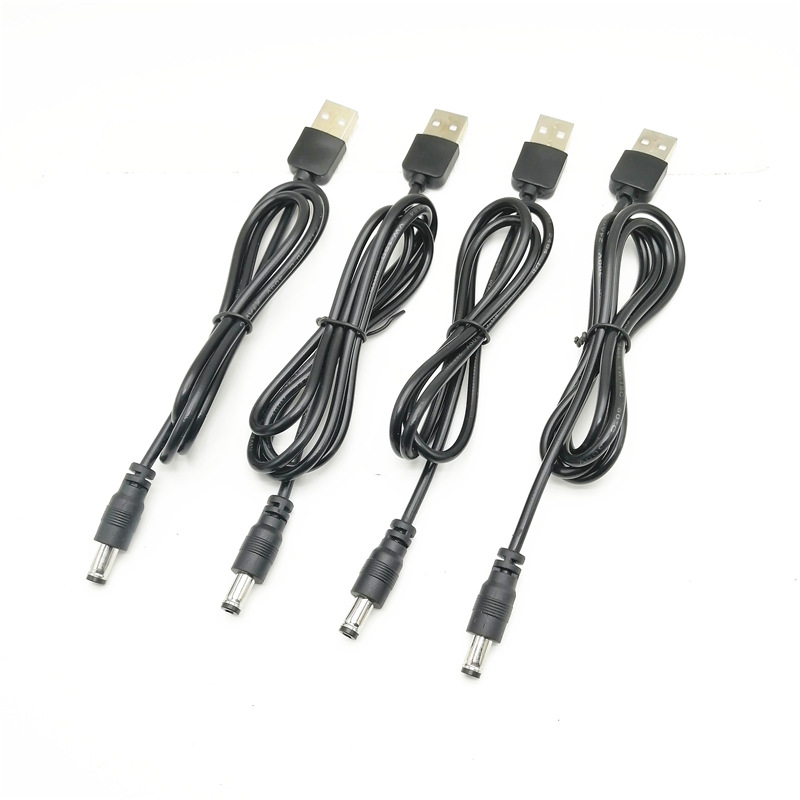
There is no fixed, universal maximum standard for DC power cables; the maximum allowable length is determined by four factors: supply voltage, load current, wire gauge, and permissible voltage drop. Standard consumer-grade DC cables focus on minimizing DC power loss, while composite DC cable with control and communication functions may simultaneously interfere with analog and digital signals over long distances. Below is a comprehensive explanation covering length limitations, loss mechanisms, signal interference, and engineering optimization.
1. DC Wire Theory and Actual Maximum Usable Length
According to the resistance formula R = ρL/S, the resistance of a wire is directly proportional to its length and inversely proportional to its cross-sectional area. In a DC circuit, the total length of the circuit needs to be calculated for both the positive and negative poles traveling back and forth. The voltage drop ΔU = 2 × I × ρ × L/S. The industry standard is that the terminal voltage drop should not exceed 3% to 5% of the power supply voltage. If it exceeds this limit, equipment may experience under-voltage restart, black screen, or flickering faults.
1.Consumer Fine Wire DC Cable (24-28AWG, original adapter wiring)
5V/12V low-current devices (routers, cameras, desk lamps, 0.5-2A), for 28AWG fine wire, the safe length is within 1.5 meters only; for 24AWG copper wire, it can reach 5-10 meters. Beyond 10 meters, the terminal voltage of 12V devices will drop to below 10V, and LED and monitoring systems will directly drop frames and restart. The regular production upper limit of ready-made extended DC cables on the market is 10 meters. Beyond 10 meters, manufacturers will directly thicken the conductor to 18-20AWG.
2. Industrial thick-walled DC cables (0.75mm² and above)
12V security centralized power supply, 24V industrial control equipment. A single 0.75mm² copper wire with a 1A load can be laid for 50 meters; a 2.5mm² copper wire with a 10A load can provide stable transmission for 100 meters; High-voltage DC (48V, 1000V photovoltaic DC) reduces current by high voltage, and with large square cable, it can achieve wiring distances of hundreds of meters or even kilometers.
3. There is no physical hard limit on length, and cost constrains the production boundary
Theoretically, if the copper wire can be infinitely thickened, the DC line can be several hundred meters long. However, the cost of thick copper cables and the difficulty of wiring increase significantly, and they are rarely used in civilian scenarios. In the field of long-distance power supply, the outdoor industry does not use ultra-long DC straight lines. Instead, it uses high-voltage DC long-distance supply + remote voltage reduction modules to solve the problem of long-line loss and the transmission distance can reach several kilometers.
II. Long-term Impact on DC Power Supply
The most direct negative effects of long lines are voltage drop and power loss, which are also the root cause of most DC wiring failures.
First, the voltage at the load end is insufficient. Take a 12V/1A monitoring device and a 10-meter 28AWG thin wire as an example. The total resistance of the circuit is close to 2Ω. With full load, the voltage drop is 2V, and the device only receives 10V, which is lower than the minimum working threshold of the driver. This causes the device to repeatedly restart after night-time infrared activation and have a lagging picture. Industrial standards require that the voltage drop of precision equipment be controlled within 3%, while for ordinary lighting and motors, it can be relaxed to 5%.
Second, the line heats up and power loss increases. The resistance of long lines will continuously consume electrical energy and convert it into heat. The greater the current, the more obvious the heat generation. When multiple long lines are bundled and laid, the heat accumulates, accelerating the aging of the outer skin, and in severe cases, causing short circuits and fires. The power loss of a thin long line under full load can reach more than 15% of the total power consumption of the entire machine. Long-term use leads to energy waste.
Third, dynamic load fluctuations increase voltage drop. Equipment startups, instantaneous peak currents (motor startup, infrared lighting), will cause the voltage drop on the long line to double in an instant. The drastic voltage fluctuations impact the power chip of the power supply, shortening the lifespan of the adapter and the device.
III. Interference Mechanism and Manifestation of DC Long-Run Lines on Signal Transmission
A single power supply DC line only transmits direct current and has almost no signal loss when there is no data signal. If the DC cable integrates control lines, analog signal lines, or is located close to network cables or video cables, long-distance lines will generate multiple signal interferences.
1. Parasitic RC parameter distorted digital signal
After the wire is elongated, the distributed capacitance and parasitic inductance between conductors increase simultaneously, and the RC time constant rises with the square of the length. The edge of the digital pulse becomes slower, the distinction between high and low levels becomes blurred. In I2C and 485 low-speed communication lines, errors and instruction loss may occur, and high-speed control signals basically cannot be stably transmitted. In engineering, the length of the communication DC control line is usually limited to within 10 meters.
2. Power supply ripple coupling interference with analog signals
The power supply ripple of the long line amplifies the switch power supply, and the ripple radiates and couples into the analog video and audio lines. The horizontal stripes on the monitoring screen and the noise of the audio current are all caused by this. Unshielded DC long lines have stronger electromagnetic radiation, and when they are laid in parallel with network cables, they will cause packet loss and increased latency in the network.
3. Contact resistance of connectors amplifies signal distortion
For extremely long DC lines, multiple connections are required. Each DC male-female connector will generate additional contact resistance. After the long line is combined with multiple connectors, the voltage and signal attenuation increase exponentially. In outdoor humid environments, the oxidation of metal connectors will further deteriorate the transmission stability.
IV. Long-term DC Cabling Optimization Plan
There are four practical solutions for controlling length loss and reducing signal interference: First, increase the conductor cross-sectional area. Under the same distance, doubling the wire diameter will halve the voltage drop; second, increase the supply voltage. From 12V to 24V or 48V, the current under the same power will be halved, significantly reducing the loss of long-distance lines; third, add a shielding layer. The shielded DC line can suppress radiation interference and protect the synchronous transmission signal; fourth, segment the power supply. For wiring over 100 meters, cancel the single ultra-long DC line and adopt nearby power sources or remote voltage reduction modules to shorten the length of each segment of the cable.
Overall, in daily consumer scenarios, DC lines are recommended to be controlled within 5 meters, and for industrial applications with signal-combined DC lines, the distance should not exceed 10 meters. If a 100-meter-long long-distance DC transmission is necessary, prioritize replacing with thick-diameter cables or upgrading to a high-voltage remote power supply solution, balancing power supply stability and signal integrity.
Contact: Jerry_Shi
Phone: +86-13652508770
Tel: +86-13652508770
Email: [email protected]
Add: LianFeng Road,XianXi Village,ChangAn Town,DongGuan City,GuangDong Province,China