
Home > News
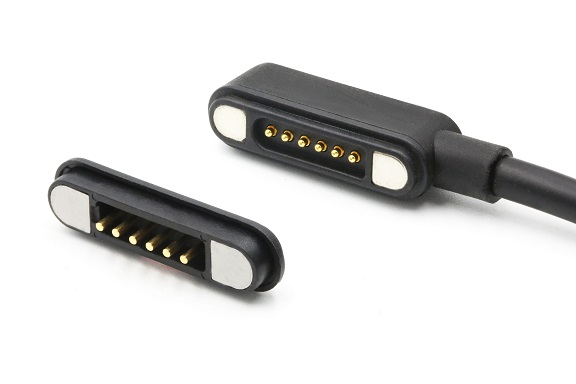
The magnetic charging cable, with its convenient features of no need for plugging and unplugging and no wear and tear, has become a common accessory for daily digital charging. However, compared to the traditional integrated data cable, its special split structure and the industry-wide low-cost manufacturing process have led to frequent safety hazards such as leakage, short circuits, overheating, and even device damage. Most users only know that the magnetic cable is prone to breakage and jumping charges, but they ignore the hidden safety risks. The safety hazards of the magnetic charging cable are not accidental failures, but are caused by multiple problems such as inherent structural design flaws, substandard material use, wear and aging during use, and environmental interference. This is also the core reason why its safety coefficient is much lower than that of the original data cable.
The magnetic suction exposed contact structure is the primary inherent defect that can cause short circuits and leakage. Traditional data cables have their contacts hidden inside the connector, which has strong sealing properties and is less likely to come into contact with external impurities. However, the magnetic suction charging uses an exposed metal ring contact design. The positive and negative electrode contacts are directly exposed to the air, without any protective shielding. During daily use, desktop metal debris, iron filings, and conductive dust are easily adsorbed onto the magnetic suction contacts. The magnetic suction itself has magnetism and will actively adsorb fine metal impurities, directly connecting the positive and negative electrodes, forming a temporary short circuit, triggering the charging trip and power-off of the device. Moreover, the exposed contacts are prone to be contaminated by sweat, water stains, and cooking oil. The salt and moisture will cause the contacts to continuously conduct electricity, resulting in a weak leakage current. When the human body touches the interface, a slight numbness will be felt. In a humid environment, the risk of leakage will increase exponentially.
Low-quality materials and poor workmanship significantly amplify safety hazards. The vast majority of affordable magnetic connection cables on the market are designed to cut costs, resulting in serious craftsmanship deterioration. The insulation protection layer inside the cable is made of thin material with extremely poor toughness. After long-term bending, it is highly likely to break and cause leakage of electricity. The inner copper core wire diameter does not meet the standard, and during high-current charging, the circuit is overloaded and overheats. High temperature melts the internal insulation layer, causing the positive and negative poles of the wire core to stick together and short-circuit. The welding process inside the magnetic connector is rough, with common problems such as excessive solder accumulation, poor soldering, and detachment. Excess solder residue remains inside the connector, and it is highly likely to fall off after electrical vibration, causing an internal short circuit. In addition, the poor-quality magnetic connectors lack overcurrent, overvoltage, and overheating protection chips. They cannot automatically shut off the power when there is an abnormal current. After a short circuit or leakage occurs, they cannot protect themselves, and are highly likely to damage the equipment battery and charging IC.
Structural wear and aging lead to persistent safety hazards. The magnetic suction cable relies on magnetic attraction to conduct electricity. Repeated magnetic suction, pulling, and bumping over a long period of time will cause the metal coating on the magnetic suction head to wear off, the base material to oxidize and rust, and the contacts to deform and protrude. The deformed contacts do not fit evenly, generating arc sparks when powered on. The continuous high temperature burns the internal structure, causing the insulation layer to carbonize and leak electricity. At the same time, the magnetic suction head is always inserted into the phone's tail plug. Daily squeezing and bumping will cause the internal wires of the magnetic suction to break and the wiring to be misaligned, resulting in a micro-short circuit between the positive and negative poles. This manifests as abnormal charging, overheating, and static electricity leakage on the device body. Compared to ordinary data cables, the magnetic suction split structure wears out faster, and after aging, the safety hazards will continue to intensify. There is no buffer transition period.
The environment and improper usage habits can trigger sudden safety accidents. Many users use magnetic charging in damp environments, bathrooms, or on rainy days outdoors. Water vapor seeps into the exposed contacts, directly causing circuit leakage and short circuits. Some users pull the wire while charging, or place their phones in the bed to charge before going to sleep. The magnetic connector is compressed and deformed, and heat accumulates, which is highly likely to cause the insulation layer to melt and the circuit to short circuit. At the same time, using a high-power fast charger in combination with poor-quality magnetic charging cables leads to power mismatch, resulting in unstable current and voltage, and long-term overloading of the circuit, causing leakage, breakdown, and short circuits. Additionally, tangled magnetic cables and knotted wires can cause local heat accumulation and compression and damage of the wire cores, further increasing the probability of safety accidents.
Magnetic field interference and circuit design flaws exacerbate electrical abnormalities. The built-in permanent magnets in magnetic suction devices generate magnetic fields that can disrupt the stability of charging current, causing fluctuations in voltage and current, and triggering micro-leakage in the circuit. Some non-compliant magnetic suction products have unreasonable circuit designs, with the positive and negative contact points too close together, resulting in an extremely low fault tolerance rate. Even minor impurities or deformations can trigger short circuits. Moreover, these products lack shielding and voltage stabilization structures, and long-term use can lead to current leakage, causing leakage of the device body and accumulation of static electricity, which not only damages the equipment but also poses potential risks of electric shock and fire.
Therefore, the leakage and short-circuit hazards of magnetic charging cables are caused by both inherent structural flaws and subsequent issues related to materials and usage. Their characteristics of exposed conductors, simple manufacturing process, and lack of protection make their safety coefficient much lower than that of traditional data cables. During daily use, it is necessary to regularly clean the contacts, avoid using in humid environments, replace aging and damaged cables in time, and avoid using inferior fast-charging devices to effectively avoid safety risks.
Contact: Jerry_Shi
Phone: +86-13652508770
Tel: +86-13652508770
Email: [email protected]
Add: LianFeng Road,XianXi Village,ChangAn Town,DongGuan City,GuangDong Province,China