
Home > News
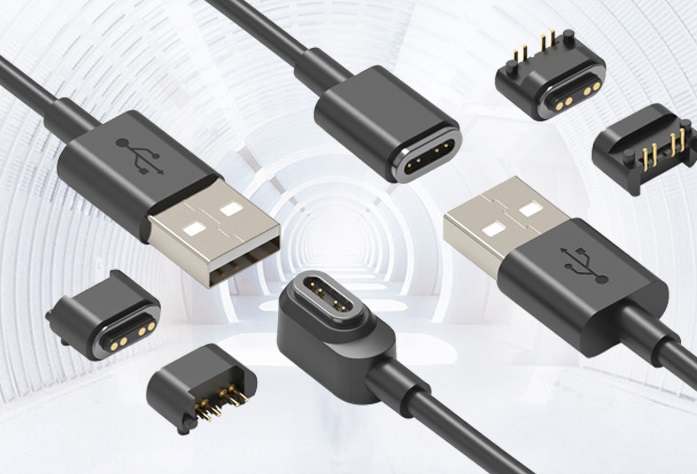
Most of the magnetic charging cables on the market have the problem that they can only charge but cannot transfer photos, files, or connect to a computer for flashing or screen projection. Even some products claim to support data transmission, but in actual use, they often fail. This phenomenon is not a fault of the device, but a common problem caused by multiple factors such as the structural design, hardware reduction, contact layout, and protocol compatibility of the magnetic charging cable. Compared to ordinary data cables that can fully support data transmission and charging in one device, magnetic charging cables inherently have a data transmission weakness. The following is a comprehensive analysis of the core reasons for this.
First and foremost, the core reason is that most magnetic charging cables completely eliminate the data lines, which is a deliberate reduction by the manufacturers. A standard USB data cable contains four essential lines: the positive power supply line, the negative power supply line, the positive data line, and the negative data line. All four lines are indispensable for both charging and data transmission simultaneously. However, over 90% of the affordable magnetic charging cables on the market have omitted two sets of data transmission wires to reduce production costs and lower failure rates. The inner wires only retain the positive and negative power supply copper wires. This type of cable is essentially a pure power supply cable, and its hardware does not have the basic conditions for data transmission. Therefore, it can only charge and cannot recognize data connections, which is the main reason why data cannot be transmitted.
Secondly, the number of contacts on the magnetic connector is insufficient and the layout is restricted, making it unable to conduct data transmission. The conventional data cable connector has complete pins and includes dedicated data contacts, while the magnetic charging uses a separate exposed contact design. Due to volume and structural limitations, the magnetic head has very few metal ring contacts, mostly consisting of only two power supply contacts, which are solely responsible for current conduction. To achieve data transmission, additional data transmission contacts and grounding contacts are required, with extremely high requirements for contact precision, layout density, and adhesion. Cheap magnetic products simplify the process and reduce the probability of failure, only retaining the basic power supply contacts and deleting all data contacts. Even for some multi-contact magnetic heads, there are issues with irregular contact arrangement and incorrect alignment, and after adsorption, the data contacts cannot precisely adhere, resulting in the data path being disconnected and only the power path functioning normally.
Again, the magnetic contact characteristic leads to extremely unstable data transmission. Manufacturers generally disable the data transmission function. The requirements for connection stability, resistance consistency, and contact accuracy in data transmission are much higher than those in charging. Current charging only requires simple conduction, and the fault tolerance rate is extremely high. Minor loose connections and resistance fluctuations do not affect the charging function. However, data transmission is a high-frequency signal transmission, and it has extremely high requirements for contact fit, line impedance, and signal shielding. The magnetic connection relies on magnetic attraction to achieve contact conduction, and it is prone to minor gaps, contact oxidation, and slight shaking and loose connections, which will directly cause data signal interruption, garbled data, and transmission failure. To avoid users frequently encountering problems such as file transmission failure and connection disconnection, manufacturers will directly disable the data function in the firmware and structure, and only retain the stable charging function.
The magnetic suction cable lacks a signal shielding layer and thus cannot meet the requirements for data transmission. Ordinary data cables are equipped with a double-layer shielding layer of aluminum foil and woven mesh inside, which can isolate external electromagnetic interference and ensure stable transmission of high-frequency data signals. However, most magnetic suction charging cables have no any shielding design. The cables are thin and the craftsmanship is poor. The electromagnetic interference generated by the charging current will directly disrupt the data signal. At the same time, the built-in magnet in the magnetic suction head will generate a magnetic field when working, further interfering with the high-frequency data transmission signal, causing the connection to the computer to fail to be recognized, transmission to be sluggish, and the device to crash and disconnect. Even if some magnetic suction cables retain the data lines, they will still not be able to use the data function properly due to excessive interference.
Finally, the compatibility conflicts of fast charging protocols restrict the data transmission function. Nowadays, most mobile phones are equipped with fast charging protocols. However, the fast charging mode and the data transmission mode have mutually exclusive characteristics. When the device starts fast charging with a high current, the system will prioritize the charging mode and cut off the data transmission channel to stabilize the charging voltage and reduce power consumption and heat generation. Most magnetic suction cables focus on the fast charging function and, by default, lock the fast charging mode at factory. They cannot switch to the data mode. At the same time, the protocol compatibility of non-brand magnetic suction cables is chaotic, and they cannot complete the data handshake protocol. The device is identified as a simple power supply device, and naturally, the data transmission function will not be enabled.
In conclusion, the inability of magnetic charging cables to transmit data is the inevitable result of multiple factors such as hardware cuts, structural flaws, signal interference, and protocol limitations. Manufacturers, in order to enhance product stability and control costs, generally abandon the data transmission function and focus on the necessity of charging. If you need to transfer files or perform system updates and screen projection, you can only replace the original magnetic charging cable with a regular data cable. Magnetic charging cables are only suitable for daily charging and cannot replace the all-inclusive functions of standard data cables.
Contact: Jerry_Shi
Phone: +86-13652508770
Tel: +86-13652508770
Email: [email protected]
Add: LianFeng Road,XianXi Village,ChangAn Town,DongGuan City,GuangDong Province,China