What is the maximum voltage of LVDS cable?
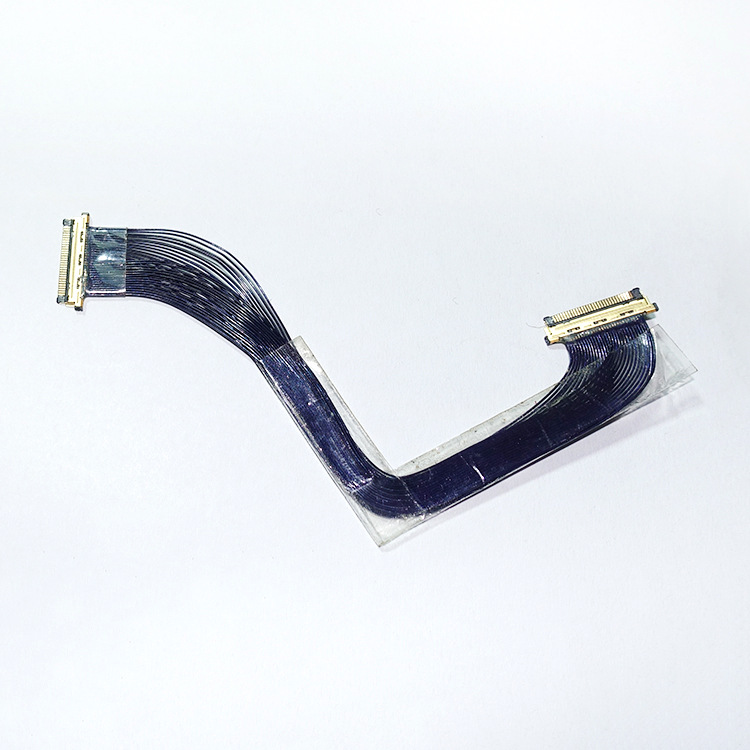
LVDS (Low Voltage Differential Signaling) cables are core components for high-speed signal transmission in display systems, automotive electronics and industrial devices. As the name “low voltage” suggests, LVDS operates on ultra-low voltage signals, which is a key reason for its low power consumption and strong anti-interference capability. Many users confuse the operating signal voltage with the cable’s maximum withstand voltage, leading to improper wiring and insulation failures. To ensure equipment safety and signal stability, it is essential to clarify the standard operating voltage, absolute maximum voltage limit, and safe voltage range of LVDS cable in practical applications.
First, the standard working signal voltage of LVDS is extremely low and strictly defined by industry specifications. The typical single-ended signal voltage of LVDS ranges from 1.0V to 1.4V, while the differential voltage between paired signal lines is only 350mV to 450mV. This tiny voltage swing distinguishes LVDS from traditional TTL and CMOS parallel signals that usually work at 3.3V or 5V. The low-voltage working mode greatly reduces electromagnetic radiation and power loss, enabling stable high-frequency transmission. Under normal operating conditions, the signal voltage will never exceed 2V, which is the normal working threshold for all standard LVDS cable systems.
In terms of the maximum withstand voltage, LVDS cables have two critical voltage limits: signal tolerance voltage and insulation breakdown voltage. For signal transmission safety, the maximum tolerable signal voltage for standard LVDS cables is 3.3V. Exceeding this value will break the voltage balance of differential pairs, cause signal distortion, and even damage the receiving chip’s sensitive circuit. Unlike power cables, LVDS cables are designed exclusively for weak signal transmission, not for power supply delivery. Any access to 5V or higher voltage will directly lead to signal system failure or permanent component burnout.
Another key parameter is the cable’s insulation maximum voltage, which refers to the highest voltage the sheath and internal insulation layer can withstand without breakdown. Most flexible flat LVDS cables and twisted-pair industrial LVDS cables have a rated insulation voltage of 30V to 50V. This voltage is not for signal transmission but for preventing static discharge and accidental high-voltage leakage. In daily use, if the external interference voltage or static voltage exceeds 50V, the cable insulation layer may break down, causing short circuits between signal lines and damaging the entire display control system.
It is crucial to distinguish LVDS voltage limitations from ordinary power cables. LVDS cables have ultra-strict voltage tolerance due to their high-precision signal transmission attributes. In actual installation and maintenance, technicians must never mix LVDS signal lines with power lines. High voltage from power circuits will not only distort high-speed differential signals but also break through the thin insulation layer of LVDS cables. In industrial and vehicle environments with frequent static interference, adding isolation modules can prevent transient high voltage from impacting LVDS lines.
In summary, the maximum usable signal voltage of LVDS cables is 3.3V, and the maximum insulation withstand voltage is 50V for mainstream models. Its normal working differential voltage is only about 400mV. Understanding these voltage limits helps avoid wrong wiring, insulation breakdown and equipment damage. Adhering to LVDS low-voltage working specifications is the basic guarantee for stable signal transmission and long service life of electronic display systems.