Is LVDS serial or parallel?
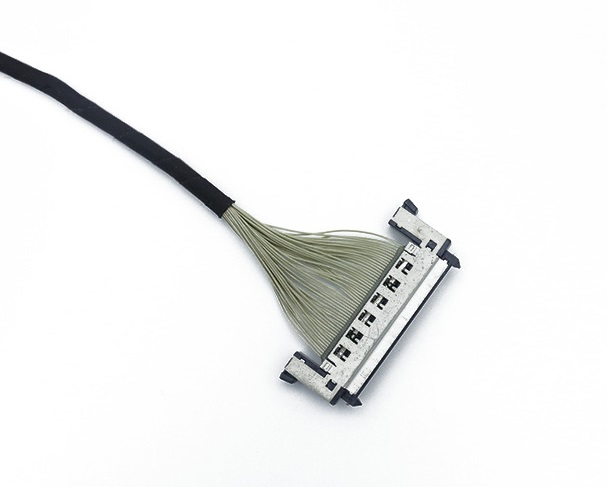
A common confusion among electronic engineers and technical learners is whether LVDS (Low Voltage Differential Signaling) belongs to serial or parallel transmission technology. Many people misunderstand LVDS as a parallel standard due to its multi-pin cable structure used in display connections. In fact, LVDS cable is essentially a high-speed serial differential transmission technology. Its unique design combines serial transmission efficiency with multi-channel parallel grouping, forming a hybrid working mode that differs from traditional pure serial and classic parallel interfaces. Clarifying this attribute is vital to understanding LVDS’s superior stability, high speed, and wide application in modern display and industrial systems.
To define LVDS accurately, it is necessary to distinguish between traditional parallel transmission and serial transmission. Classic parallel interfaces transmit multiple data bits simultaneously through independent lines in one clock cycle. Although they achieve high instantaneous throughput, they suffer from obvious flaws, including severe crosstalk, signal skew, and poor stability at high frequencies. In contrast, pure serial transmission sends data bit by bit through a single channel, featuring strong anti-interference and suitable for high-speed long-distance transmission, though with relatively low single-channel bandwidth.
LVDS adopts a serial point-to-point transmission mechanism for each data pair, which is its core technical attribute. Each LVDS differential pair transmits data in serial form rather than parallel bit output. The multi-group differential pairs in LVDS cables do not work like traditional parallel lines. Instead, they operate as multiple independent serial channels working in parallel. For example, mainstream 4-channel LVDS displays use four separate serial differential pairs to transmit data simultaneously. This design is the key difference that sets LVDS apart from obsolete parallel display interfaces such as TTL.
This hybrid serial-parallel design brings prominent technical advantages. Compared with traditional parallel transmission, LVDS effectively eliminates signal skew and line crosstalk. The low-voltage differential serial signal has strong noise resistance, supporting higher transmission frequencies and longer cable distances. Unlike fragile high-frequency parallel signals, LVDS serial pairs maintain complete signal integrity even in complex electromagnetic environments. Meanwhile, the multi-channel parallel grouping compensates for the bandwidth limitation of single serial channels, enabling LVDS to carry high-resolution and high-refresh-rate display data efficiently.
It is worth emphasizing that the industry’s definition of LVDS is uniformly based on its serial transmission nature. The multi-wire structure often confuses beginners, but the internal working logic of every data line group strictly follows serial transmission rules. Each differential pair transmits serialized data streams synchronously under clock signal coordination, rather than transmitting multi-bit parallel data in a single clock cycle. This is why LVDS has replaced traditional parallel display interfaces and become the mainstream standard for modern display transmission.
In conclusion, LVDS is fundamentally a serial transmission technology with multi-channel parallel grouping characteristics. It is neither a pure parallel interface nor a single-channel serial interface. By combining the anti-interference and high-speed advantages of serial transmission with the high-bandwidth performance of parallel grouping, LVDS achieves optimal balance between transmission stability and data throughput. This unique attribute explains its wide application in consumer electronics, automotive displays, and industrial equipment, and why it remains the most reliable solution for medium and high-speed short-range data transmission.