
Home > News
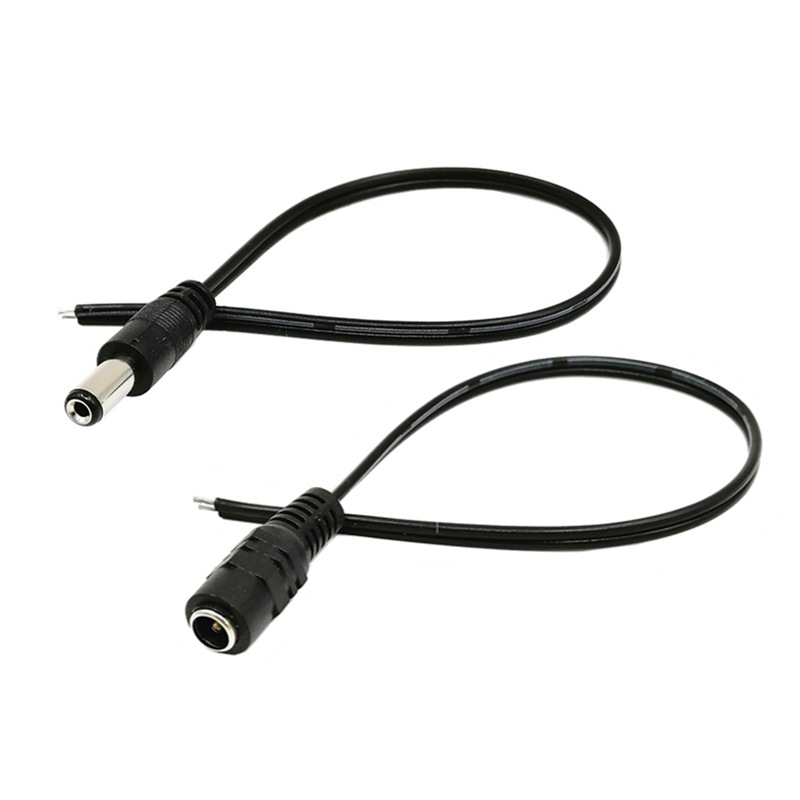
AC cables are designed for alternating current, while DC cables are intended for direct current. Based on different power supply principles, they differ fundamentally in electrical characteristics, structural design, application scenarios, safety standards, and loss properties, making them two types of cables that must not be used interchangeably in electrical wiring.
From the perspective of power supply principles, AC cables transmit alternating current, in which the magnitude and direction of the current periodically alternate at a fixed frequency—domestic mains electricity typically operates at 50 Hz. DC cable, on the other hand, carry direct current with a constant flow direction and relatively stable voltage. Household 220V mains power is delivered via AC cables, while mobile phone chargers, internal low-voltage supplies in laptops, and battery connections use DC cables. These fundamental differences directly determine the material selection and design specifications of the cables.
There are significant differences in voltage, current and wire specifications. Common voltages for civilian AC wires are 110V, 220V, and 380V. The voltage levels are relatively high, and when wiring, consideration must be given to the withstand voltage insulation. The insulation layer of domestic AC copper wires in accordance with national standards generally has a withstand voltage of ≥300/500V. For high-power AC lines, the wire diameter is thick, while for small-power sockets, 0.75mm² and 1.0mm² copper wires are commonly used. DC wires are mostly low-voltage direct current, with common voltages being 5V, 12V, 24V, and 48V. Some energy storage high-voltage DC is excluded. The insulation withstand voltage requirements for conventional low-voltage DC wires are lower. For example, data line DC wires mostly use 22AWG and 24AWG thin wires. AC has peak voltage. Under the same nominal voltage, AC wires actually withstand higher instantaneous voltage, and the insulation thickness is generally thicker than that of DC wires of the same specification.
The cable structure and polarity marking are the key indicators for intuitive distinction. AC (alternating current) has no distinction between positive and negative poles. In household AC cables, there are three types: live wire, neutral wire, and ground wire. They are distinguished by color: live wire is red/yellow, neutral wire is blue, and ground wire is yellow-green dual color. There is no need to distinguish the direction when connecting. For DC (direct current) cables, polarity is strictly distinguished. Connecting in the wrong direction can easily damage electrical equipment. Commonly, red represents positive and black represents negative for general identification. For multi-core DC cables, the symbols + and - are printed. AC power cables are mostly two-core or three-core sheathed cables, with fewer copper wires inside and thicker single wires. For DC cables, most use multi-strand fine and soft copper wires, which have better flexibility and are suitable for frequent plugging and unplugging of equipment, such as DC plug power cables.
Power loss is different from transmission capacity. In AC transmission over long distances, there is a skin effect, with the current concentrating on the surface of the conductor, and the longer the line, the greater the loss; in DC transmission, the current uniformly passes through the cross-section of the conductor, and the loss is smaller for longer lines. High-voltage direct current transmission is the mainstream solution for long-distance power transmission. In low-voltage scenarios, the DC line with the same wire diameter can carry a greater effective current than the AC line; in high-voltage scenarios, AC takes the lead in the power distribution market due to its convenient voltage transformation advantage. In daily short-distance electrical wiring, the difference is not significant; in long-line wiring, the difference in loss will be significantly greater.
The application scenarios and safety regulations have different focuses. AC wires are mainly used for power entry into residential areas, air conditioners, refrigerators, socket wiring, industrial mains power equipment, and high-voltage AC lines are found on power poles throughout the power grid. Construction must follow strong current regulations. Leakage can cause electric shock hazards. They must be protected with ground wires and air switches. DC wires are mainly used in the weak current field: DC charging cables for digital devices, monitoring power cables, vehicle-mounted lines, photovoltaic panel connections, lithium battery connection lines.Low-voltage DC (5V/12V) has extremely low electric shock risks, but short-circuiting of the positive and negative poles can cause a sudden high current and easily lead to fire. Therefore, high-power DC circuits should be equipped with fuses and protection boards.
In simple terms, the AC cable is suitable for alternating high-voltage mains power systems, without positive or negative poles, and has high insulation and withstand voltage; the DC cable is suitable for constant low-voltage direct current systems, with positive and negative poles, and the cable material is soft. These two types of cables cannot be interchanged randomly for connection. Misuse may result in the equipment not working at all, or in severe cases, short circuits, fires, and damage to the electrical appliances.
Contact: Jerry_Shi
Phone: +86-13652508770
Tel: +86-13652508770
Email: [email protected]
Add: LianFeng Road,XianXi Village,ChangAn Town,DongGuan City,GuangDong Province,China