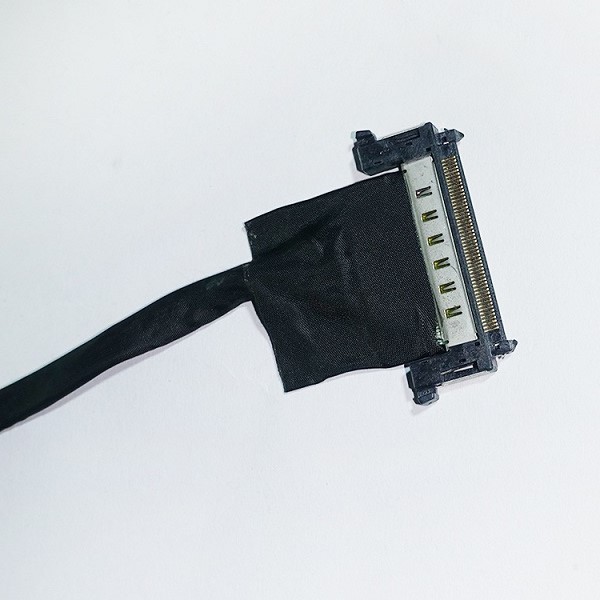
LVDS, short for Low Voltage Differential Signaling, is a high-speed and low-power signal transmission technology, and the LVDS cable is the specialized wire harness designed to match this technology. As a core connecting component in modern electronic display and high-speed transmission systems, LVDS cables are widely used in consumer electronics, industrial equipment, automotive electronics and other fields. Unlike ordinary data cables, they focus on stable high-speed signal transmission rather than simple power supply or low-speed data interaction, solving the problems of signal attenuation, interference and distortion in long-distance and high-frequency data transmission, and becoming an indispensable part of various display and precision electronic devices.
The primary core application of LVDS cables is high-definition display signal transmission, which is their most common and essential function. Most display devices such as laptop screens, desktop liquid crystal displays, industrial touch screens, and smart TV screens rely on LVDS cables to connect the main control board and the display panel. Modern display screens carry massive image data, including high-resolution pixels, color grayscale information and dynamic frame data, which require transmission cables to support high bandwidth and high frequency. LVDS cables transmit data through differential signal pairs. The low-voltage differential transmission mode can efficiently transmit a large amount of image data in real time, ensuring that the screen presents clear, smooth and no-stuttering pictures. Compared with traditional single-ended signal cables, they avoid image blurring, screen flickering and color distortion caused by insufficient transmission bandwidth.
Anti-electromagnetic interference transmission in complex environments is another key purpose of LVDS cables. A large number of electronic devices will generate electromagnetic radiation during operation, and high-speed signal transmission is extremely vulnerable to external interference, resulting in data errors. LVDS cables adopt twisted-pair shielding structure and differential transmission principle. The two mutually twisted wires carry equal and opposite signals, which can automatically offset most external electromagnetic interference and internal signal crosstalk. This unique advantage makes them widely used in industrial and automotive scenarios. In industrial control equipment, they connect industrial hosts and display terminals to ensure stable operation of monitoring screens in high-electromagnetic-interference factory environments. In automotive electronics, they transmit signals for car central control screens, instrument screens and reversing image displays, adapting to the complex electromagnetic environment inside the car and avoiding screen failure or data loss during driving.
In addition, LVDS cables are used for low-power and long-distance high-speed data transmission. The working voltage of LVDS technology is only about 3.3V, which is far lower than that of traditional transmission technologies. This low-voltage working feature enables the cable to consume extremely low power during signal transmission, which is very suitable for battery-powered portable electronic devices such as notebooks and tablet computers. It effectively reduces the overall power consumption of the equipment and extends the battery life. At the same time, under the premise of ensuring signal integrity, LVDS cables can realize stable data transmission within a distance of several meters, breaking the distance limit of ordinary high-speed cables, and meeting the layout requirements of internal circuits of large equipment such as industrial all-in-one machines and large-screen display splicing systems.
It is also worth noting that LVDS cables have professional grading and targeted usage scenarios. Consumer-grade LVDS cables are thin, flexible and lightweight, adapting to the narrow internal space of portable electronic devices. Industrial-grade and automotive-grade LVDS cables have enhanced shielding, high temperature resistance and tensile resistance, which can adapt to harsh environments such as high temperature, vibration and strong interference. In addition to display signal transmission, they are also used for high-speed connection of precision sensors, industrial camera data transmission and other scenarios, providing stable signal guarantee for intelligent equipment operation.
In conclusion, LVDS cables are professional high-speed transmission cables centered on low-voltage differential signaling technology. Their core uses cover high-definition display transmission, anti-interference data transmission in complex environments, and low-power long-distance signal interaction. With the continuous upgrading of electronic equipment towards high resolution, high speed and high stability, LVDS cables, as reliable connection components, still occupy an irreplaceable position in the electronic manufacturing industry, supporting the normal operation of various intelligent display and precision transmission devices.