Is LVDS cable better than HDMI cable?
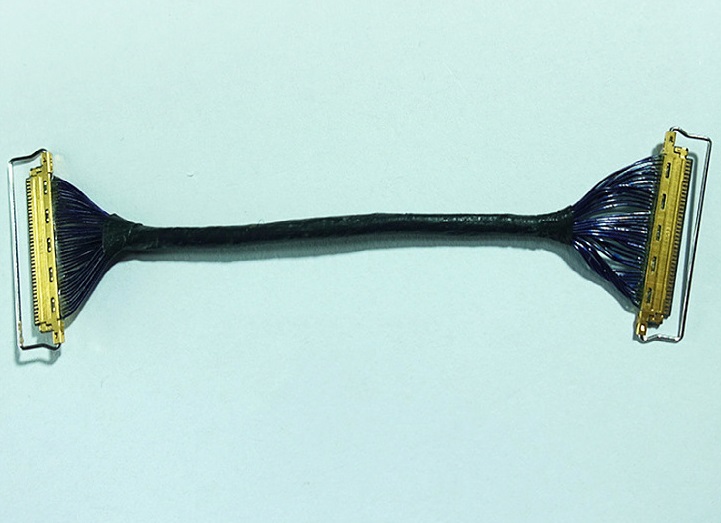
In modern electronic display systems, LVDS and HDMI are two dominant transmission technologies widely used for video and image data transmission. Many users and electronic manufacturers often wonder whether LVDS cable are better than HDMI cables. In fact, there is no absolute answer to which one is superior. LVDS (Low Voltage Differential Signaling) cables and HDMI (High-Definition Multimedia Interface) cables have distinct technical principles, performance advantages and applicable scenarios. While LVDS boasts outstanding stability and anti-interference capabilities for internal equipment transmission, HDMI excels at universal external audio and video transmission. Judging their quality must be based on specific usage environments and functional demands.
LVDS cables have unique inherent advantages in industrial and built-in device transmission, making them more superior in professional embedded scenarios. The core strengths of LVDS lie in strong anti-electromagnetic interference, low power consumption and stable long-distance transmission. Adopting twisted-pair differential signal transmission, LVDS cables offset external electromagnetic interference and internal signal crosstalk automatically. This allows them to work stably in harsh environments with high vibration, high temperature and strong magnetic interference, such as industrial workshops and automobile interiors. In contrast, ordinary HDMI cables are more susceptible to signal distortion and data loss under complex electromagnetic interference.
Besides, LVDS cables feature low voltage and low power consumption, which is irreplaceable for portable and integrated electronic devices. With a working voltage of only 3.3V, LVDS technology consumes minimal power during high-speed data transmission, effectively reducing the overall energy consumption of devices like laptops, industrial all-in-one machines and vehicle-mounted displays. Moreover, LVDS can maintain complete signal integrity for transmission distances up to several meters, meeting the internal wiring layout requirements of large equipment. HDMI cables, by comparison, have higher power consumption and limited stable transmission distance, making them unsuitable for long-term embedded internal transmission of precision devices.
Nevertheless, HDMI cables show absolute advantages in civil universal audio and video transmission, where LVDS cables cannot compete. As a standardized multimedia interface, HDMI supports synchronous transmission of high-definition video and lossless audio signals, realizing one-line connection for devices such as TVs, projectors, game consoles and desktop computers. It is compatible with mainstream consumer electronic devices worldwide, with plug-and-play simplicity and ultra-high versatility. LVDS, however, is mostly customized for internal equipment connection, lacking unified universal interfaces. It cannot be directly used for external cross-device connection and requires professional adaptation and debugging, which is extremely inconvenient for daily civilian use.
In terms of transmission performance and functional expansion, the two cables also have different orientations. New-generation HDMI protocols support 4K, 8K ultra-high definition resolution, high frame rate display and HDR dynamic image technology, fully meeting the demands of high-definition video entertainment and commercial display. LVDS is mainly oriented to medium and high-definition screen transmission of internal equipment. Although it has stable bandwidth, its support for ultra-high resolution and high frame rate is slightly inferior to advanced HDMI versions. In addition, HDMI integrates intelligent functions such as signal encryption and device mutual recognition, while LVDS focuses purely on stable data transmission with no additional multimedia expansion functions.
To sum up, it is inappropriate to simply conclude that LVDS cables are better than HDMI cables or vice versa. LVDS cables are better choices forinternal embedded, industrial, vehicle-mounted and precision device display transmission due to their high stability, anti-interference and low power consumption. HDMI cables dominate external civilian multimedia connection, high-definition video playback and multi-device interconnection scenarios with their universality and powerful multimedia performance. In practical electronic design and daily use, selecting the appropriate cable according to usage scenarios is the key to achieving the best transmission effect.