What does LVDS cable standard for?
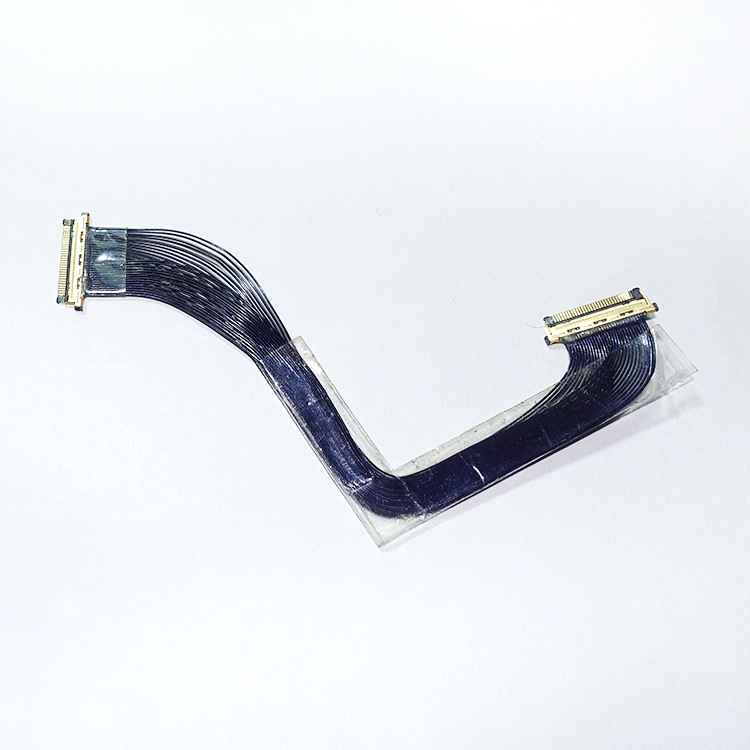
LVDS cable standards refer to a complete set of unified technical specifications, parameter criteria and manufacturing norms that govern the design, production, wiring and signal transmission of Low Voltage Differential Signaling cables. These professional standards are formulated by international electronic industry organizations to ensure the compatibility, stability, safety and consistency of LVDS cables across different devices, manufacturers and application scenarios. Many ordinary users only know that LVDS cables are used for screen signal transmission, but few understand that their excellent anti-interference performance and high transmission stability entirely depend on standardized technical constraints. Simply put, LVDS cable standards define every core indicator of the cable, including electrical parameters, structural design, shielding performance, wiring rules and environmental adaptability, becoming the fundamental benchmark for judging cable quality and applicability.
First and foremost, LVDS cable standards unify core electrical performance parameters, which is the most basic and critical part of the specifications. The international general standard clearly stipulates that LVDS adopts a low-voltage differential transmission mode with a fixed swing voltage of 350mV, far lower than the voltage of traditional single-ended signal cables. This standard strictly limits the working voltage range, signal transmission rate and impedance characteristics of qualified LVDS cables. Standard-compliant LVDS cables must maintain a fixed differential impedance of 100 ohms, which ensures the complete matching of signal transmission and avoids signal reflection, attenuation and distortion caused by impedance mismatch. In addition, the standard regulates the transmission bandwidth of LVDS cables, specifying that mainstream products can support a transmission rate of hundreds of megabits per second to several gigabits per second, fully adapting to the data output requirements of various resolution display panels.
Secondly, LVDS cable standards specify structural and wiring specifications to guarantee signal stability. The standard clearly requires that LVDS signal wires must adopt a twisted-pair structure, and each group of differential signal lines needs to be tightly twisted at a fixed pitch. The twisting pitch error is strictly limited within a small range to ensure that the two signal lines receive consistent external electromagnetic interference and realize automatic interference cancellation. Meanwhile, the standard divides LVDS cables into single-channel and multi-channel specifications, and defines the wire quantity, arrangement order and color distinction of different versions. For multi-group LVDS cables used in high-resolution screens, the standard stipulates the spacing between different signal pairs to prevent internal crosstalk between adjacent signal groups, which is the key reason why standardized LVDS cables are far more stable than ordinary modified data cables.
LVDS cable standards also classify shielding and environmental resistance grades for different application scenarios. According to industry unified standards, LVDS cables are divided into consumer grade, industrial grade and automotive grade. Consumer-grade standards are applicable to portable devices such as laptops and tablet computers, requiring lightweight, flexible and thin cable bodies with basic shielding functions to meet conventional indoor use. Industrial-grade standards improve the requirements of high temperature resistance, tensile resistance and anti-interference shielding, enabling cables to work stably in high-temperature, dusty and strong electromagnetic interference environments for a long time. Automotive-grade LVDS standards are the most stringent, with stricter specifications for vibration resistance, low-temperature resistance and aging resistance, adapting to the complex and variable working environment inside vehicles.
In addition, LVDS cable standards define interface compatibility and safety specifications. The unified interface protocol standard ensures that standard LVDS cables can be adapted to mainstream display control boards, industrial display screens and vehicle display equipment of different brands, avoiding compatibility failures caused by non-standard wiring. At the same time, the manufacturing standard strictly restricts the production materials of cables, requiring the use of flame-retardant, non-toxic and high-insulation materials to prevent short circuits, leakage and circuit burnout. Non-standard LVDS cables on the market often cut corners on shielding layers, wire core materials and twisting processes, failing to meet industry standards, which leads to screen flickering, signal loss and even equipment burnout during use.
In conclusion, LVDS cable standards are the unified technical norms covering electrical performance, structural design, production technology, shielding grade and safety performance. They stand for high stability, high compatibility and high anti-interference of display signal transmission, and provide a reliable quality benchmark for electronic equipment manufacturing. Understanding LVDS cable standards helps users and manufacturers distinguish qualified products from inferior ones, select suitable cables according to different usage scenarios, and effectively ensure the long-term stable operation of display systems and precision electronic equipment.