
Home > News
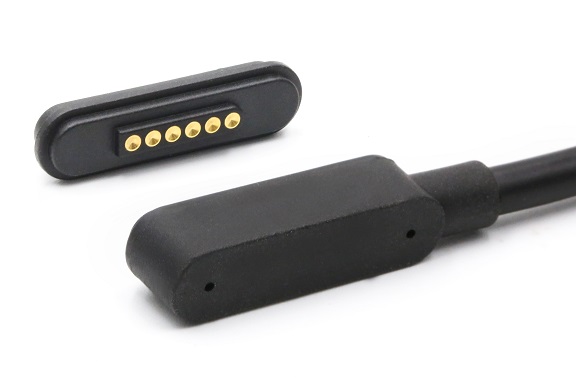
The magnetic charging method causes abnormal overheating of the cables, the magnetic heads, and the phone body. The root cause is excessive power consumption in the circuit, abnormal accumulation of heat due to abnormal current, and the inability to dissipate the heat in time. This can lead to accelerated aging of the cables, power interruption and device shutdown in mild cases, and damage to the phone's charging chip and battery in severe cases. The faults can be mainly classified into four types: magnetic contact loss, non-compliant cable specifications, mismatched charger power, and equipment/environmental issues.
First, poor contact of the magnetic suction points is the primary cause of overheating. The magnetic charging cable suction relies on exposed metal rings to make contact with the conductive material. When the contact points accumulate dust, oil, or are oxidized and blackened, the actual conductive area of the metal contact surface significantly shrinks, and the contact resistance sharply increases. According to Joule's law, the current flowing through a large resistance will be largely converted into heat energy. The magnetic suction head overheats first, and the heat then conducts along the metal to the phone interface. Even without a power outage, minor loose connections will continue to generate heat; the local single-point contact of the contact points concentrates the current at a very small point, and it becomes hot to the touch in a short period of time. Some magnetic suction metal coatings have peeled off, the contact points are uneven, and there are gaps after they are attached, and the gaps generate arc losses, causing continuous heating. Daily sweat and salt on the hands adhere to the contact points, causing electrochemical corrosion, accelerating oxidation, and further increasing the contact resistance, making the heating more and more obvious.
Secondly, the materials used for the magnetic attachment cables are of poor quality, and the wire core specifications have shrunk. The internal copper core wires in regular fast-charging data cables have sufficient diameters, low internal resistance, and controllable heat generation. However, low-priced magnetic attachment cables often cut corners and skimp on materials. The copper wires are thin, the copper purity is low, and the number of wire strands is insufficient. The internal resistance of the cables is relatively high. Under high current fast-charging conditions, the current continuously dissipates heat within the cable, causing the entire cable from the USB plug to the magnetic attachment end to heat up. In addition, the outer insulation layer of the cables is of poor quality and lacks a flame-retardant and heat-insulating layer. The accumulated heat cannot be dissipated outward, resulting in a hot touch. When the copper wire inside the cable is partially broken and disconnected, the resistance at the break point surges, causing the local area to heat up sharply, accompanied by intermittent charging interruptions. This is a potential hazard of high temperature. Long cable lengths and winding bundling for charging will intensify heat accumulation. The coil eddy currents will superimpose and increase the temperature. The originally slight heating becomes scorching hot.
Thirdly, mismatch between charging head power and fast charging protocol leads to overload and overheating. For instance, a high-power PD or QC fast charging charging head paired with an ordinary magnetic cable that does not support fast charging, when the charger outputs a large current according to the fast charging protocol, the cable's carrying capacity is insufficient. Once it exceeds the rated current carrying limit, the entire line will overheat. Conversely, a low-power 5V1A old-fashioned charging head, paired with a magnetic accessory that supports high-current fast charging, when the device requests fast charging power, the power supply is forced to overwork, resulting in voltage and current fluctuations, and the charging module continues to heat up. Low-quality charging heads have simple voltage stabilizing circuits, with unstable output voltage and excessive ripple. The power supply and the mobile phone's charging IC frequently adjust voltage and stabilize voltage, generating additional power consumption heat, causing the device body to heat up as well. Vehicle chargers and inferior USB splitter devices also supply unstable power, which can cause abnormal overheating in the circuit.
Fourth, malfunctions of the mobile device and the usage environment lead to increased heat generation. The tail connector of the phone becomes loose, the spring pins sink in, and the plug cannot be fully inserted tightly. The contact resistance at the interface increases, and the heat accumulates in the tail connector area of the phone body. The battery of the phone ages and its internal resistance increases, resulting in higher self-generated heat during charging. The magnetic interface also heats up due to the combined effect. When running games or videos under high load while charging, the processor of the phone remains fully loaded and consumes electricity continuously. Charging and discharging occur simultaneously, and the double power consumption adds up, causing the phone body and the cables to heat up synchronously. In a sealed environment for charging, such as in a bed or a sealed phone case, the air is not circulating, preventing heat from dissipating. The accumulated heat causes the temperature to increase exponentially. Under direct sunlight in a hot environment, charging is further complicated by the already high ambient temperature, and the heat dissipation is blocked, exacerbating the heating problem.
Fifth, internal structural defects of the magnetic attachment. The cheap magnetic attachment magnets are close to the conductive metal coils, and the magnetic field interference causes eddy current loss, resulting in overheating of internal components; the solder joints inside are small and have poor soldering, and the soldering points continue to heat up and conduct the heat to the casing. Long-term high temperature will accelerate the demagnetization of the magnets, melt the insulation layer, and subsequently cause a trip, forming a vicious cycle of overheating - poor contact - more overheating.
Therefore, the solutions include: prioritizing the cleaning of the magnetic contact points that are overheated, replacing the substandard cables, matching the rated power charger, avoiding using them in enclosed and high-temperature environments, and reducing circuit losses from the source to control the temperature rise.
Contact: Jerry_Shi
Phone: +86-13652508770
Tel: +86-13652508770
Email: [email protected]
Add: LianFeng Road,XianXi Village,ChangAn Town,DongGuan City,GuangDong Province,China