Can the DC cable be extended? What is the maximum length it can be made?
Can the DC cable be extended? What is the maximum length it can be made?
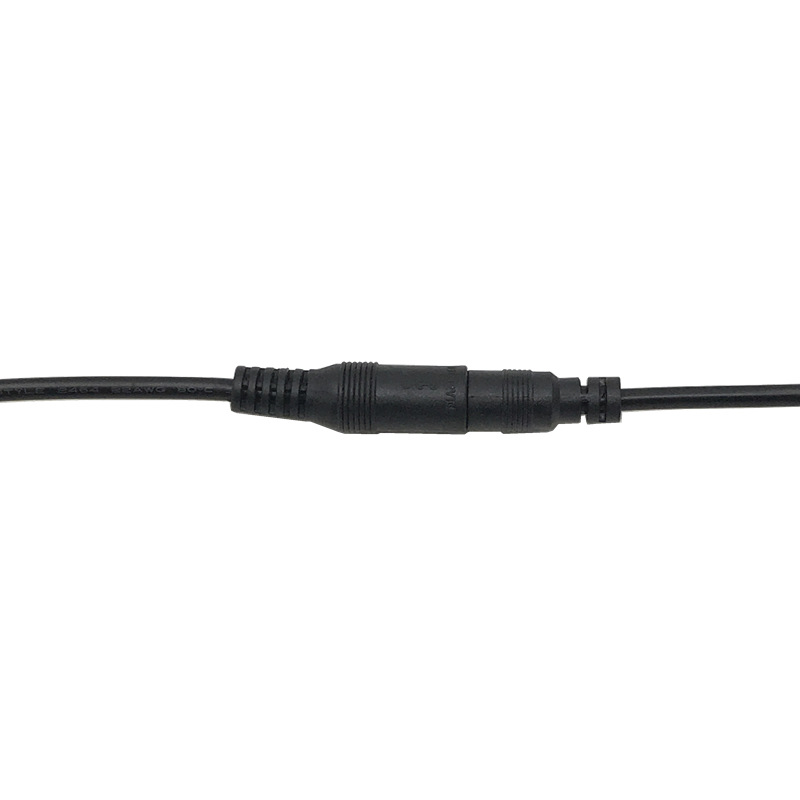
DC power cables are extendable, yet their length cannot be increased indefinitely. The maximum extension is restricted by four key factors: operating voltage, load current, conductor cross-sectional area and DC voltage drop. Longer, thinner cables with heavier load current generate larger voltage loss, which causes insufficient power supply, failed startup or intermittent loose connection of electrical devices. Common low-voltage DC ratings include 5V, 9V and 12V, with drastically different maximum safe lengths for each specification.
Copper wire has inherent resistance; total resistance rises with increased cable length. Current flowing through conductors creates voltage drop, lowering the actual input voltage received by terminal equipment below the rated output of the power adapter. Most low-voltage devices only tolerate ±5% voltage fluctuation. Taking 12V adapters as an example, a voltage drop over 0.6V leads to dim LED strips, offline surveillance cameras or cyclic power restarts, which is the core limiting factor for
DC cable extension.
1. Recommended Maximum Safe Length by Rated Voltage
12V (for routers, LED strips, CCTV cameras, set-top boxes)
With standard 24AWG (0.2mm²) copper cable and load current below 0.5A, the safe extension limit ranges from 8 to 12 meters. When current rises to 1A, the same wire can only stretch 4~6 meters. Upgrading to thicker 22AWG (0.3mm²) allows around 12-meter wiring under 1A load. For wiring over 20 meters outdoors, ordinary finished DC cords are no longer applicable; thick stranded copper wires with custom-soldered DC plugs on both ends become necessary.
9V (partial routers and small instruments)
Narrower voltage margin shortens maximum length by roughly 30% compared with 12V under identical wire gauge. Cables under 0.5A load are advised not to exceed 6 meters.
5V (mini cameras, circuit boards, portable power supply)
Most sensitive to voltage drop. Ordinary thin finished DC cords (0.15~0.2mm²) can only run 2~3 meters at 0.5A; extension beyond 3 meters commonly results in underpowered hardware. A minimum of 0.5mm² thick copper is required for lengths above 5 meters.
2. Two Practical Extension Methods
The first method uses paired male-female DC connectors for quick plug-and-splice without soldering. Convenient for temporary use within 3 meters, yet extra joints introduce additional contact resistance and intermittent connection faults mentioned previously. The second solution cuts the original cable, twists identical core wires, solders joints and seals with heat-shrink tubing. Lower contact resistance ensures superior stability, ideal for cables longer than 5 meters. For long-distance wiring, single whole-length cable is preferred to minimize intermediate connectors.
3. Optimization for Ultra-Long Wiring
For wiring spanning dozens of meters, extending low-voltage DC directly is not recommended. The industry-standard solution routes 220V AC mains close to the load first, then installs the DC adapter beside terminal equipment to convert high voltage locally, eliminating DC voltage drop fundamentally. If long-distance DC wiring is mandatory due to budget limits, enlarging conductor cross-section remains the only feasible way to reduce resistance and voltage loss.
4. Common Misconceptions & Precautions
Cheap non-compliant DC cords adopt undersized copper-clad aluminum or impure copper with fake labeled wire gauge, cutting practical usable length nearly in half. Extended wiring requires power adapters with extra power margin to avoid aggravated voltage drop under full load. Besides, suspended long cables suffer constant pulling force; fixed installation with cable clips reduces bending stress and prevents broken wires near plug roots.
In conclusion, regular thin household DC cords are limited within 10 meters for 12V low-current loads and 3 meters for 5V systems. Larger conductor size improves feasible length, yet voltage drop forbids unrestricted extension; hundred-meter-level power delivery abandons direct low-voltage DC cabling entirely.