What causes poor DC line contact and intermittent disconnections?
What causes poor DC line contact and intermittent disconnections?
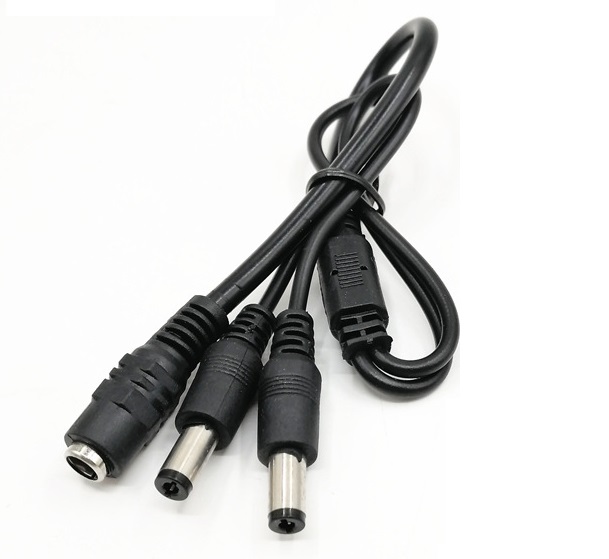
Intermittent power cuts and poor contact are among the most prevalent faults for low-voltage DC cables. Root causes mainly fall into five categories: fractured wiring inside plugs, degraded socket spring clips, damaged outer insulation, dimensional mismatches between connectors, and wear from operating environments. Most defects occur at the two stressed cable ends instead of the middle section.
1. Fatigue Breakage at the Plug Root (Primary Failure, over 70% of faults)
The junction between the DC plug and rubber strain relief endures frequent bending from repeated plugging, pulling and equipment shifting. Constructed from stranded fine copper wires, the inner conductors develop fatigue fractures after countless flexes. Only a fraction of strands remain loosely connected; slight shaking or twisting temporarily disconnects the circuit, which restores when wires fall back into contact.
Once the rubber sheath cracks with aging, dust and moisture seep inside and oxidize leftover copper strands, raising electrical resistance and triggering random outages. Low-grade DC cables use thin, sparsely stranded copper with poor bend resistance, developing hidden internal breaks within months with no visible exterior damage. Wiggling the plug alone triggers power drops.
2. Loose and Fatigued Spring Clips on Equipment DC Jacks
Repeated insertion gradually pries open the metallic spring clips of device-mounted DC sockets, diminishing their clamping elasticity. Unable to grip the plug’s center pin and outer barrel tightly, minor movement or vibration pulls contacts apart; readjusting the plug angle re-establishes temporary connectivity.
Dust buildup and humid surroundings cause rust and oxidation on clip surfaces, forming an insulating film that blocks stable current flow. Even fully seated plugs only make spot contact, leading to intermittent blackouts upon jostling. High operating heat warps the plastic base of aged jacks, shifting clip positions and widening fitting tolerances that cause loose fits even with original matched cables.
3. Partial Core Breakage and Insulation Damage Along Cable Length
Crushing or sharp abrasions split outer insulation and sever partial internal copper strands. Broken strands intermittently touch to conduct power and separate under stress. Exposed cores occasionally short against opposite conductors, causing abrupt power loss mimicking loose contact. Improper tight coiling twists internal wiring over time, inducing hidden wire damage; compression on damaged segments cuts off power instantly until pressure is released. Such mid-cable failures prove harder to locate than plug-end damage.
4. Poor Compatibility from Inconsistent Connector Dimensions
Common DC plug specifications include 5.5×2.1 mm and 5.5×2.5 mm. Mismatched sizing results in undersized barrels unable to be clamped firmly, or short pins failing to reach the effective contact zone of socket springs. Cheap off-spec plugs suffer large production tolerances with shortened center pins and thin outer casings, permanently sitting in partial contact and dropping power with tiny vibrations.
Worn-off metal plating exposes bare base metal prone to oxidation. Rising resistance under heavy load generates heat, thermally contracting contacts open; cooling resets contact for cyclic intermittent power failure.
5. Environmental Factors and Improper Usage Accelerate Degradation
Humidity, cooking grease and airborne dust creep into connector gaps to accelerate corrosion. High ambient temperature softens insulation and shifts inner wire positions to alter contact alignment.
Rough live plug removal by yanking the cable concentrates mechanical stress at plug roots, speeding wire fracture and clip fatigue. Leaving cables hanging vertically lets gravitational pull slowly detach internal solder joints; cold-soldered loose joints separate with vibration and rejoin while stationary, a classic source of erratic connectivity.
Quick Troubleshooting Guide
Wiggle the plug root: power cut indicates broken internal wiring near the plug. Rotate only the plug while securing the cable: outages point to faulty socket springs. Flex different cable sections: localized power loss means mid-cable core damage. Replacing the cable fixes plug breakage; rusted or deformed jacks require contact polishing or full socket replacement.