What is a DC cable for?
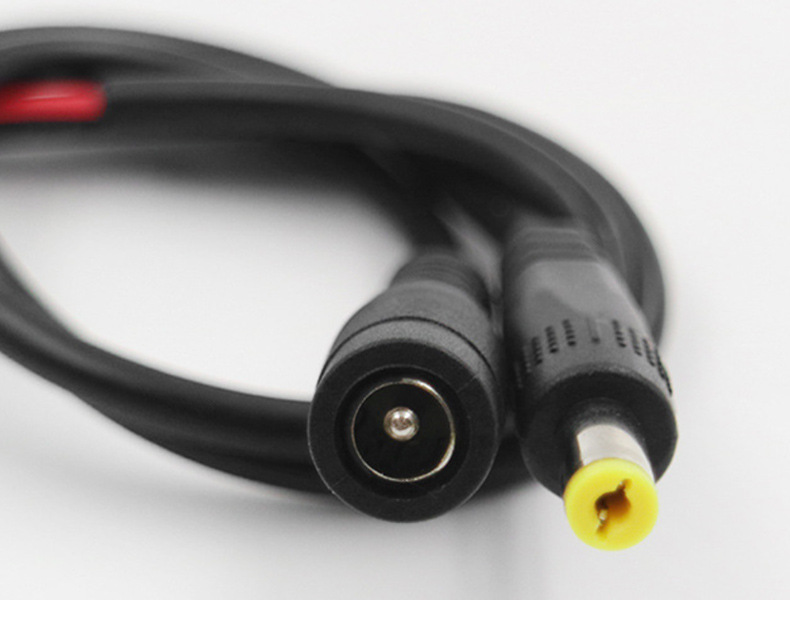
In modern power systems and electronic devices, cables are essential media for energy and signal transmission. Unlike common AC (Alternating Current) cables that dominate municipal power grids, DC (Direct Current) cables are professional power carriers with unique design and targeted functions. Many people are familiar with daily electrical cables but remain unclear about the specific purposes and application value of
DC cable. Simply put, a DC cable is a special wire designed exclusively for transmitting stable unidirectional direct current. It is tailored to adapt to the working characteristics of DC power, making it irreplaceable in new energy systems, electronic equipment, low-voltage power supply and many professional fields. Understanding what a DC cable is used for helps clarify power wiring standards and ensure the safe and stable operation of various electrical devices.
The core fundamental purpose of DC cables is to stably transmit unidirectional, constant-voltage direct current. Different from alternating current that changes direction and frequency periodically, direct current maintains a fixed current direction and stable voltage. Ordinary AC cables are optimized for alternating current fluctuation and electromagnetic changes, while DC cables adopt special insulation materials and structural designs to adapt to the long-term electrostatic field environment of DC power. Their most basic function is to conduct DC power from power supply terminals to electrical loads without voltage attenuation, current fluctuation or insulation aging failure, ensuring the continuous and stable operation of DC-powered equipment.
One of the most important application scenarios of DC cables is the new energy industry, which is the core usage scenario of modern high-performance DC cables. Solar photovoltaic power generation is a typical representative. Solar panels generate pure direct current after absorbing sunlight, and DC cables are responsible for transmitting this generated electricity from photovoltaic modules to inverters. Since photovoltaic power generation belongs to long-term outdoor DC power transmission, professional PV DC cables can resist ultraviolet radiation, high temperature, rain erosion and long-term DC voltage breakdown, avoiding circuit failure and power loss. Similarly, wind energy power generation, energy storage battery packs and portable power stations all rely on DC cables to complete internal power transmission and energy storage conversion.
Low-voltage electronic and electrical equipment is another major application field for DC cables. Most small and medium-sized precision electronic devices work on DC power, and DC cables act as their exclusive power connection lines. Common household and commercial equipment such as LED lighting, mobile power supplies, surveillance cameras, routers, and computer internal circuits all use DC cables for power supply. These devices require stable current and voltage to avoid circuit burnout, screen flicker or data loss caused by current fluctuation. The excellent stable transmission performance of low-voltage DC cables can perfectly meet the precise power supply needs of precision electronic equipment, ensuring the normal operation of daily smart devices.
In the transportation and industrial fields, DC cables undertake key power transmission tasks as well. New energy electric vehicles are highly dependent on high-power DC cables, which connect vehicle power batteries, motor controllers and charging systems. Whether it is on-board power transmission or DC fast charging of electric vehicles, special DC cables are required to bear high-current and high-voltage DC load, with excellent heat resistance and safety to adapt to complex vehicle working conditions. In industrial production, automated control equipment, DC motor systems and industrial testing instruments also use DC cables to provide stable power support for precision industrial operations, reducing equipment failure rates caused by unstable power supply.
In addition to power transmission, partial professional DC cables also have the function of signal transmission. In communication base stations, instrumentation systems and intelligent control circuits, some low-current DC cables can transmit both tiny DC power and control signals. These dual-purpose DC cables feature anti-interference and stable transmission performance, which can effectively isolate external electromagnetic interference, ensure the accuracy of control signals and the stability of equipment power supply, and play an important role in intelligent and automated industrial systems.
It is crucial to distinguish the exclusive purpose of DC cables from AC cables. DC cables are specially used for all scenarios where direct current is generated, transmitted and used. They cannot be completely replaced by ordinary AC cables, because AC cables are unable to resist long-term DC electrostatic field erosion and are prone to accelerated aging and safety hazards. The exclusive design of DC cables, including anti-aging insulation, uniform wire core conduction and anti-interference structure, all serves the stable transmission of DC power, which is the essential reason for their wide application in new energy, precision electronics and industrial fields.
To sum up, a DC cable is a professional power transmission medium dedicated to direct current systems. Its core purposes cover new energy power generation and energy storage, precision electronic equipment power supply, new energy vehicle power transmission, industrial intelligent control and communication signal transmission. With the rapid development of new energy technology and intelligent electronic equipment, the importance of DC cables is becoming increasingly prominent. Understanding their functions and application scenarios and using dedicated DC cables in a standardized manner can effectively guarantee the safety, stability and service life of DC power systems, which is an essential foundation for the operation of modern low-carbon and intelligent power systems.