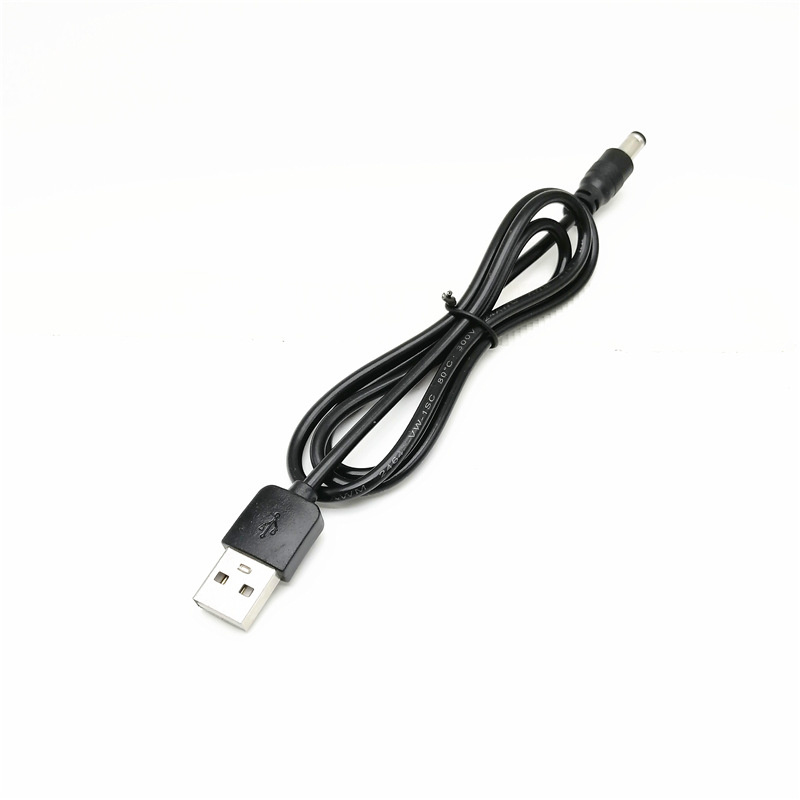
Many people often confuse AC cables and DC cables in daily electrical construction and equipment installation, especially in low-voltage projects such as monitoring systems, smart devices and household circuits. On the surface, these two types of power cables look almost identical, with similar outer insulation and copper cores. However, AC cables and DC cables are essentially different in working principles, structural design, electrical performance and application scenarios. They cannot be mixed and used arbitrarily, otherwise it will easily cause equipment instability, line overheating, and even short-circuit fire hazards. This article will clearly analyze the key differences between AC cables and
DC cable in practical engineering.
First of all, the fundamental difference lies in the transmission current characteristics. AC stands for Alternating Current, whose current direction and magnitude periodically change with a fixed frequency, usually 50Hz in civil power systems. AC cables are designed to adapt to this alternating power supply mode. In contrast, DC means Direct Current. The current transmitted by DC cables is unidirectional and stable with no frequency fluctuation. This core difference leads to completely different loss characteristics of the two cables. AC current produces the skin effect, where current mainly flows on the surface of the copper core, while DC current evenly passes through the entire cross-section of the wire core. As a result, under the same wire diameter and distance, DC cables have lower power loss and higher transmission efficiency.
Secondly, they differ greatly in structural design and identification standards. AC cables have no positive and negative polarity. Household AC wiring is divided into live wire, neutral wire and ground wire, distinguished by unified industry colors: red or yellow for live wires, blue for neutral wires, and yellow-green dual-color for ground wires. The wiring direction is flexible and there is no risk of reverse connection failure. DC cables have strict positive and negative polarity distinctions, generally marked red for positive and black for negative. Once the positive and negative poles are reversed, low-voltage electrical equipment such as cameras and controllers will be burned out instantly. In terms of wire structure, conventional AC power cables have thicker insulation layers to withstand high alternating peak voltage, while low-voltage DC cables are more flexible with multi-strand fine copper wires, suitable for frequent plugging and short-distance equipment connection.
Thirdly, the voltage level and insulation requirements are different. AC cables are mainly used for high-voltage and medium-voltage power transmission and distribution. Civil household AC voltage is 220V, and industrial AC voltage can reach 380V or higher. Therefore, AC cables are manufactured with high insulation withstand voltage, usually 300/500V or even higher, with strong pressure resistance and aging resistance to adapt to long-term grid power supply. DC cables are mostly used for low-voltage scenarios, including common 5V, 12V, 24V and 48V. Low-voltage DC has almost no electric shock risk, so the insulation thickness of standard DC cables is thinner than AC cables of the same specification. Only high-voltage DC transmission cables will adopt enhanced insulation design.
In addition, their application scenarios and failure risks are distinct. AC cables are mainly used for municipal grid power supply, household wall wiring, high-power electrical equipment such as air conditioners, refrigerators and industrial power distribution. The main safety hazard of AC lines is electric shock and leakage, which requires matching with ground wires and circuit breakers for protection. DC cables are widely used in monitoring equipment, battery systems, automotive circuits, photovoltaic power supply and smart low-voltage devices. Low-voltage DC is safe for human bodies, but its biggest hidden danger is short circuit. The instantaneous large current generated by DC short circuit will cause wire heating and ignition more easily than AC lines.
Finally, the selection standards for wire diameter are different. When selecting AC cables, engineers mainly consider peak voltage, load power and insulation performance, and the line voltage drop is not obvious in short-distance household wiring. For DC cables, voltage drop is the primary consideration. Long-distance low-voltage DC transmission has serious line loss, so DC cables need thicker wire diameters than AC cables for the same distance and power. For example, 50-meter monitoring wiring requires 0.5mm² DC cable, while AC line with the same load can use a thinner wire specification.
In conclusion, DC cables and AC cables are not universal. They have obvious differences in current characteristics, polarity design, insulation standards, application ranges and failure risks. In electrical construction, standardized wiring must be followed: use AC cables for grid alternating current power supply and dedicated DC cables for low-voltage direct current equipment. Correct selection and use can effectively ensure the safety and stability of the entire electrical system and avoid unnecessary equipment damage and safety accidents.