
Home > News
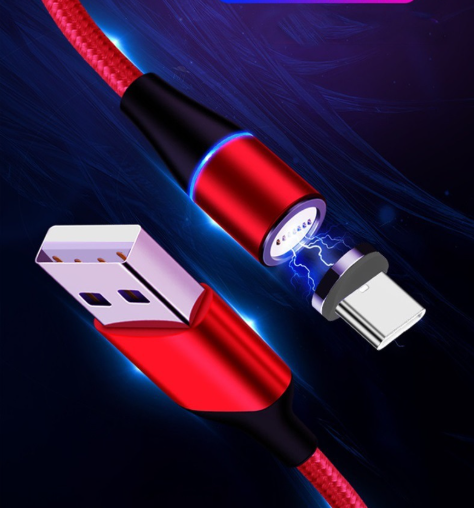
From the perspective of industrial design standards, the theoretical lifespan of high-quality magnetic charging cables far exceeds the expectations of most users. The high-end magnetic connectors with pogo pin spring pins can achieve a laboratory insertion and removal lifespan of over 100,000 times - if plugged and unplugged 5 times a day, theoretically, they can be used for more than 50 years. However, this ideal data is significantly reduced in real scenarios. The actual lifespan mainly depends on the usage intensity:
For mild users (charging 1-2 times a day, mainly for night charging), the stable lifespan of branded magnetic charging cables is usually 2-3 years. The actual tests by mainstream brands such as GreenLink show that after 9 months of continuous use (with over 1,200 insertions and extractions), the magnetic force and charging efficiency show no significant decline, and the magnetic head does not fall off or change color.
For heavy users (plugging and unplugging more than 5 times a day, frequently charging and playing), the lifespan will be shortened to 1-2 years. It is particularly important to note that high-power magnetic fast-charging cables of 240W and above have the risk of "premature aging": Laboratory disassembly tests show that after three consecutive weeks of full-load fast charging, the probability of poor contact of the magnetic charging cable is 47% higher than that of ordinary straight-plug cables. High temperature-induced demagnetization of the magnet and oxidation of the contact points are the main causes. As for low-priced magnetic charging cables without brands, most will experience a decrease in magnetic force and intermittent charging after 6-8 months of use, and some even completely fail after 3 months.
The failure of magnetic wire is never a "sudden death", but rather the result of the long-term accumulation of multiple factors. Among these, the four major factors have the most significant impact on the lifespan:
The first is high-temperature aging, which is also the "number one killer" of magnetic wire. The magnet's magnetism is extremely sensitive to temperature. Neodymium iron boron magnets will begin irreversible demagnetization at temperatures above 80°C. Continuous temperature rise at 240W fast charging, exposure to the car interior, and use in hot summer conditions will accelerate magnet demagnetization and adhesive failure. At the same time, high temperatures will make the insulation layer of the wire material harden and become brittle, making the interface more prone to bending and breaking.
The second is contact wear and oxidation. Magnetic wire relies on metal contacts for conductivity. Frequent plugging and unplugging will wear the surface plating of the contacts, exposing the copper substrate which gradually oxidizes in the air, forming a high-resistance oxide layer. At the same time, the magnetic structure naturally adsorbs iron filings and dust, which accumulate in the contact gap and further increase the contact resistance, causing a decrease in charging power and increased heating, forming a vicious cycle of "heating - oxidation - more heating".
The third is the hidden harm of usage habits. Many users habitually coil the wire tightly into a ball for storage, which will cause the wire core to remain under bending stress for a long time, gradually causing fatigue and fracture of the internal copper wire; while charging and playing at the same time, repeated pulling and shaking will cause the magnetic head to frequently micro-disconnect, not only affecting charging but also accelerating contact wear; bending the interface excessively during charging is also the most common cause of wire breakage.
The fourth is the quality defects of the product itself. Low-priced magnetic wire is often "cheating and reducing materials": the contacts use 0.5OZ thin copper foil instead of 1OZ thick copper foil, and the temperature rise threshold is half of that of high-quality products; the magnets use ordinary ferrite instead of neodymium iron boron, which has weak magnetic force and is prone to demagnetization; the wire does not have tensile fibers and interface metal reinforcement, and breaks easily after being folded; even omitting the over-temperature protection chip, it will burn out when overloaded.
Before a magnetic cable completely breaks down, it will give clear warning signals: it needs to be repeatedly adjusted to connect when charging, the fast charging suddenly turns into slow charging (20W fast charging drops below 10W), it disconnects upon slight touch, and the magnetic force of the magnetic head significantly decreases. These are all signals indicating that it needs to be replaced or maintained. Among them, 80% of the "slow charging" problems can be solved by cleaning - wipe the magnetic contact points with a soft cloth, or gently clean the stains with a 70% concentration isopropyl alcohol cotton swab. In most cases, the charging speed can be restored to its original state.
To extend the lifespan of the magnetic cable, just do three things: First, establish a cleaning habit - clean the magnetic head and device interface with a soft brush once a month to avoid the accumulation of iron filings. Second, store it correctly - loosely coil the wire and do not tightly bind it with an elastic band. Store it away from keys, coins and other metal items to avoid magnetic interference and scratches. Finally, optimize the usage method - disconnect the cable promptly after high-power fast charging is complete to avoid prolonged full-load heating. Reduce pulling when charging and playing, and do not let the cable bear excessive stress.
Overall, as long as you choose a qualified brand product and develop good usage habits, the magnetic cable can become a durable accessory rather than a consumable that needs frequent replacement. Its lifespan is not determined by the "magnetic attraction" structure, but by how we use it - treat your magnetic cable well and it can accompany you through a longer digital journey.
Contact: Jerry_Shi
Phone: +86-13652508770
Tel: +86-13652508770
Email: [email protected]
Add: LianFeng Road,XianXi Village,ChangAn Town,DongGuan City,GuangDong Province,China