
Home > News
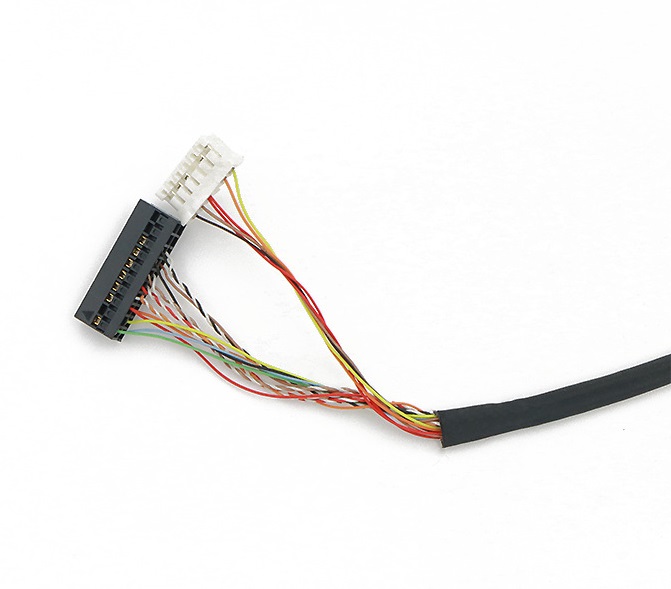
EDP cables are divided into two categories: one is the embedded display EDP flat cable (a dedicated cable for display devices), and the other is industrial EPDM-insulated power control cable. These two types differ significantly in low-temperature resistance and cannot be generalized. Ordinary consumer-grade EDP flat cables have poor low-temperature performance and are only suitable for light-duty, short-term use in cold conditions. In contrast, modified wide-temperature EDP cables can operate reliably in extremely cold environments down to several tens of degrees below zero. The following analysis comprehensively examines their low-temperature adaptability from aspects including material composition, failure risks, selection criteria, and usage guidelines.
The common consumer-grade EDP cable are mostly used in laptops and indoor displays. The insulation layers are mostly made of conventional PVC and ordinary TPE materials. The official specified operating temperature is mostly -20℃ to 80℃. The PVC material has prominent low-temperature defects. When the temperature is lower than -10℃, the molecular chains harden, the plasticity significantly decreases, and the cable loses flexibility. Minor bending or pulling will cause the insulation outer skin to crack and the core wire to be exposed. The conventional TPE has not undergone cold-resistant modification. If left to stand in a -20℃ environment for a long time, it will continuously become brittle. Repeated bending will make the differential signal line extremely prone to breakage. The conductor uses single-strand or thick-wound tin-plated copper. There is no elastic compensation at low temperatures. Under thermal expansion and contraction, the conductor stress concentrates, resulting in hidden core breakage, screen flickering, and signal loss. The plastic base of the 0.5mm spacing precision connector is made of ordinary PC material. The low-temperature shrinkage coefficient is large. The contact stress of the terminal is changed, the contact resistance rises, and intermittent short circuits occur. This is also the core cause of the low-temperature black screen of cold storage and outdoor industrial control screens.
Industrial EPD cables are made with ethylene propylene diene monomer (EPDM) as the insulating core. They are inherently suitable for low-temperature environments. The modified formula products can operate stably within the range of -40°C to 125°C. Military-grade irradiated cross-linked EPD cables can withstand the lowest ultra-low temperature of -65°C. The EPDM rubber molecular structure does not contain crystalline hard segments, so it does not harden rapidly at low temperatures. It retains elasticity and insulation performance, and has a balanced thermal expansion and contraction coefficient. Long-term low-temperature conditions will not cause the sheath to crack or delaminate. The conductor uses ultra-fine multi-strand annealed tin-plated copper, with optimized twisting pitch, and reserved residual deformation space for low-temperature deformation, so it will not break due to alternating cold and heat. After cross-linking treatment of the insulation layer, the dielectric constant at low temperatures remains stable, ensuring no signal or power transmission attenuation. The insulation resistance will not significantly decrease with the decrease in temperature, meeting the continuous operation requirements of vehicles, wind power, polar equipment, etc. At the same time, EPDM has weather resistance and anti-condensation properties. It is not prone to moisture leakage and dampness in low-temperature environments, and is suitable for outdoor open-air, cold chain, high-altitude vehicle, and other scenarios.
When using EDP cables in low-temperature environments, there are four typical failure risks. The first is mechanical damage. When ordinary PVC-EDP wiring is bent at temperatures below 0℃, the outer layer cracks directly, causing insulation failure and short circuit; the second is deterioration of electrical performance. Low temperatures increase the DC resistance of conductors, resulting in excessive voltage drop in the power supply circuit, insufficient screen backlight power supply, imbalance in differential signal impedance, deterioration of the eye diagram and appearance of picture distortion; the third is connector failure. At low temperatures, the plastic base shrinks, the gap between the terminals and the gold fingers becomes larger, and poor contact occurs under vibration conditions; the fourth is aging due to cold and hot cycles. The temperature difference between day and night repeatedly switches, micro cracks occur in the insulation layer, water vapor infiltration accelerates copper core oxidation, and shortens the service life of the cable.
If you need to use the product stably in a low-temperature environment, it is necessary to strictly distinguish the selection criteria. For short-term use in indoor low-temperature scenarios within -10℃, the modified TPE material industrial eDP cable can be selected, with a nominal temperature range of -30℃ to 90℃. The shielding layer and reinforced reinforcing plate should be added to reduce the bending frequency; for long-term use in scenarios such as cold storage, outdoor, and vehicle-mounted, ordinary PVC-EDP cables are prohibited. Special EPDM insulated cables must be selected, and priority should be given to irradiation cross-linking modification and combined with PUR cold-resistant sheath. During the construction stage, violent bending under low temperatures is prohibited. The bending radius should be no less than 15 times the outer diameter of the cable. Before handling and assembling, it can be preheated in a normal temperature environment to release the internal stress of the material. The connector should use a wide-temperature engineering plastic base, with an additional sealing ring to prevent condensation, and regular contact resistance detection should be conducted. At the equipment operation level, a low-temperature preheating program should be added. Before starting, a slight temperature increase should be carried out to reduce the instantaneous temperature difference impact of the cable and reduce the aging damage caused by cold and hot cycles.
Overall, whether EDP cables can be used at low temperatures entirely depends on the insulation material and product grade. Ordinary consumer EDP screen cables are only suitable for normal indoor temperatures and have an extremely high failure probability when used at low temperatures for a long time. EPDM material industrial wide-temperature cables have excellent low-temperature stability and can cover most severe cold conditions. The core of selecting cables for low-temperature scenarios is to abandon PVC insulation wire materials and prioritize modified cold-resistant elastomers and cross-linked EPDM cables. Combined with standardized construction and temperature control design, it is possible to ensure long-term stable operation and avoid safety hazards such as signal interruption, short circuit, and equipment shutdown.
Contact: Jerry_Shi
Phone: +86-13652508770
Tel: +86-13652508770
Email: [email protected]
Add: LianFeng Road,XianXi Village,ChangAn Town,DongGuan City,GuangDong Province,China